Five shoes for a twelve hour hospital shift that still pass a uniform policy

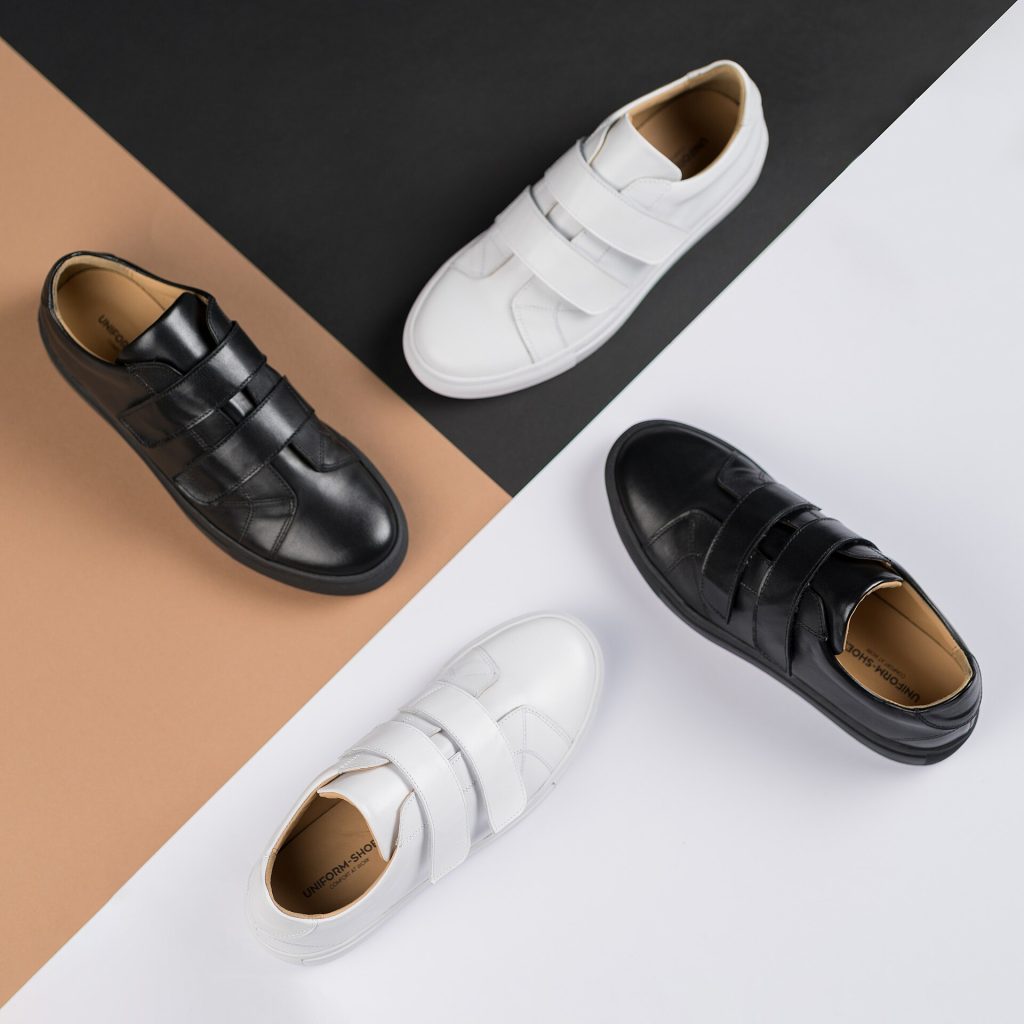
The uniform policy decides more of the shoe than the shift does. A pair that feels excellent at hour two can be turned away at the door for a mesh panel or a grey logo on the heel.
Hospital work is not one motion. It is forty short walks down a corridor, twenty minutes standing at a desk, a crouch to a low drawer and a flight of stairs, repeated until the shift ends.
The floor is polished vinyl over concrete, washed twice a day, and slick in a way that quarry tile is not. I wore each pair below for a month of shifts before writing any of this down.
A closed upper you can wipe, not a mesh that holds
Infection control looks at seams and holes before it looks at anything else. A knit or open mesh upper traps lint and spray, and it cannot be wiped with a detergent cloth because the cloth snags on it.
Look for full grain leather or a coated textile with no perforations above the midsole. Run a thumbnail across the surface: if it lifts or fuzzes, it will do the same under a wipe at the end of a shift.
The failure point is the crease across the toe box. Coated uppers crack there first, and a crack is somewhere fluid sits and stays.
A shallow tread that does not carry the ward with it
Deep lugs are built for mud and gravel. On polished vinyl they reduce the contact area and pick up whatever the last room left on the floor.
You want two to three millimetres of tread with wide, open channels and a rubber that stays soft at room temperature. Press a thumbnail into the outsole and it should leave a mark that fades.
Test the pair on a wet bathroom tile at home, turning on the ball of the foot. If it skates there, it will skate at speed at the end of a long corridor.
A tread that is too fine is the other failure. It grips a dry floor and loses all of its bite once a mop has been through, which is most of the day.
No exposed foam anywhere on the collar
Foam at the collar is comfortable for a week and then it splits, and an open split cannot be cleaned. The same applies to a padded tongue with a raw cut edge.
Ask for a rolled collar bound in leather, or a moulded rubber rim. Bend the collar back and check the inside edge for a foam core visible through the lining.
The tell after a month is a dark line along the top of the collar, where the foam has taken on moisture and stopped springing back.
An all black shoe that does not need polish to stay black
Most policies accept black leather, but a scuffed toe reads grey under corridor lighting. A shoe that needs a brush every morning is one you stop maintaining by week three.
An oiled or drum dyed black keeps its colour through a scuff. A corrected grain with a sprayed finish shows every knock as a pale patch that will not buff out.
Check the welt and the midsole edge as well. A white midsole stripe fails many dress codes on its own, however black the upper is.
A liner you can pull out and dry between shifts
Twelve hours in one shoe produces moisture that has nowhere to go. A glued liner stays damp, and the foam under the heel compresses into a hard plate.
Pull the liner out on the first day. If it comes free you can air it, replace it, and add a thin felt layer in winter without changing the fit.
A liner that has gone flat by the second month is usually the reason the shoe feels dead, not the outsole. Replace the part and keep the shoe.
Long laces catch on trolley wheels and on the rail of a bed, and elastic laces are worse because they stretch and let the heel lift. A five eyelet derby tied short, or a side zip under a flap, keeps the profile clean.
Check that the lace ends finish above the vamp rather than dangling at ankle height. If you are ever pulled into a theatre list, a slip-on with no fastening is the only version that goes on under a gown without a free hand.
Spend the money on the upper and the outsole. Those are the two parts the policy inspects and the floor punishes.
Everything else can be replaced or lived with for a year. The shoe that passes the door and still grips at hour eleven is the one worth buying twice.