Five crepe soles and the wear pattern nobody warns you about

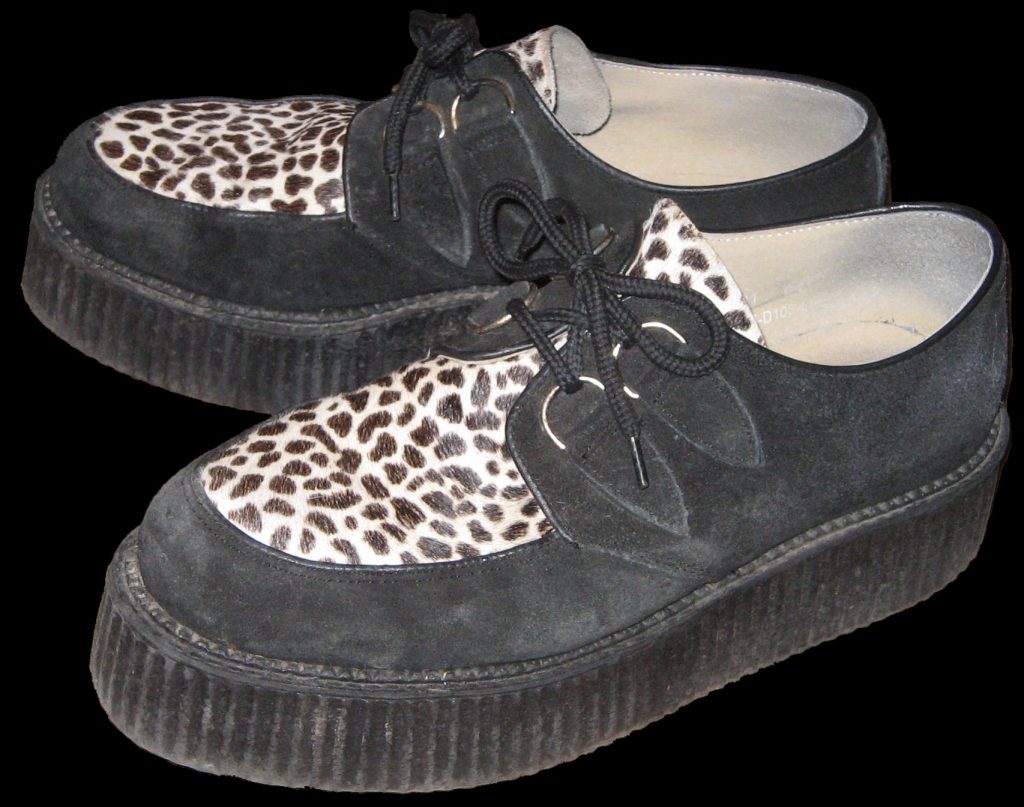
Crepe grips better than any other natural sole on dry stone and worse than almost anything once it has absorbed oil. The wear pattern nobody mentions is the one in the middle, not the one at the edge.
A crepe sole does not wear through so much as polish. The nap that provides the grip flattens into a smooth, shiny skin exactly where your weight lands, and the shoe becomes a skid while still looking nearly new.
I wore five crepe pairs for a year on pavements, and every one of them failed in the same place.
A slab thick enough to lose two millimetres a year
Crepe is soft and wears quickly on abrasive pavement. Ten millimetres at the heel gives you roughly four years before wear reaches the welt. Eight gives you two.
Measure the thickness at the heel with a ruler when the shoe is new, and write the number down. Without a starting figure you cannot tell whether a year has cost one millimetre or four.
Thin crepe is also where the sole begins to curl at the toe. Once the edge lifts, water gets under it and the bond fails from the inside.
Crepe compresses before it abrades. A slab that has lost a millimetre at the ball under load has not worn away, it has flattened, and a cold measurement will flatter it.
A centre that polishes before the edge wears
The grip of crepe comes from a rough, napped surface. Under body weight and grit, that nap mats down into a smooth patch under the ball and the heel.
Look at a used pair in raking light. A dull shine in the middle of the forefoot, with the edges still fuzzy, is polished crepe. It will slip on wet tile exactly where you need grip most.
The fix is a wire brush and ten minutes, which raises the nap again. Do it every couple of months and the sole keeps working. Skip it for a year and the surface has compacted too far to recover.
Where the shine sits tells you about your own stride. A patch under the ball alone means you land flat. A patch under both the ball and the inner heel means the shoe is rolling inward as well.
An outer heel bevel that spreads rather than wears down
Crepe does not only wear away at the outer heel corner. It spreads. The rubber mushrooms sideways under load, so the sole gets wider at the heel as it gets thinner.
Look at the back of the shoe from above. A heel wider than the upper, with a lip hanging over the edge, is a sole that has flowed.
That lip catches on kerbs and stair nosings and is the first thing to tear. It also changes the angle of heel strike, which is why crepe wearers start catching the outer edge of the shoe on flat ground.
Crepe that has not drunk the pavement
Natural crepe absorbs oil, and pavement is full of it. Once the sole has taken up oil from a garage forecourt or a kitchen floor, it goes soft at the surface and greasy to the touch.
Press a thumb into the sole and look at the mark. A greasy shine that stays is oil. A dry, even dent is just soft rubber doing its job.
Oil soaked crepe cannot be cleaned out. It also softens in heat, so a pair left in a hot car will take a set and stay deformed long after it cools.
Kitchens are the worst place for it. Cooking oil settles out of the air onto the floor, and a crepe sole picks it up in a single shift and then keeps it.
A sole screwed or stitched on, not glued
Crepe is usually attached with cement, and the cement is the weak point. Heat softens it, and a sole that has lifted at the toe cannot be pressed back with body weight alone.
Look for a row of small brass screws along the edge, or a stitched rand. Either one means a cobbler can take the slab off and fit a new one without damaging the upper.
A glued crepe sole on a cemented shoe is a single life product. When it goes, the shoe goes with it, however good the leather still looks.
Ask what the cobbler will fit before you commit. A plain crepe slab in the right thickness is easy to source. A shaped wedge in crepe is not, and the wrong one will change how the shoe stands.
Crepe is worth it if you brush the nap, keep it off hot surfaces and accept the fast wear. It is not worth it on a shoe that cannot be resoled.
Check the middle of the forefoot before you judge a used pair. If it shines, the grip has already gone, whatever the edges look like.