Four signs a shoe is worth repairing and four that say stop

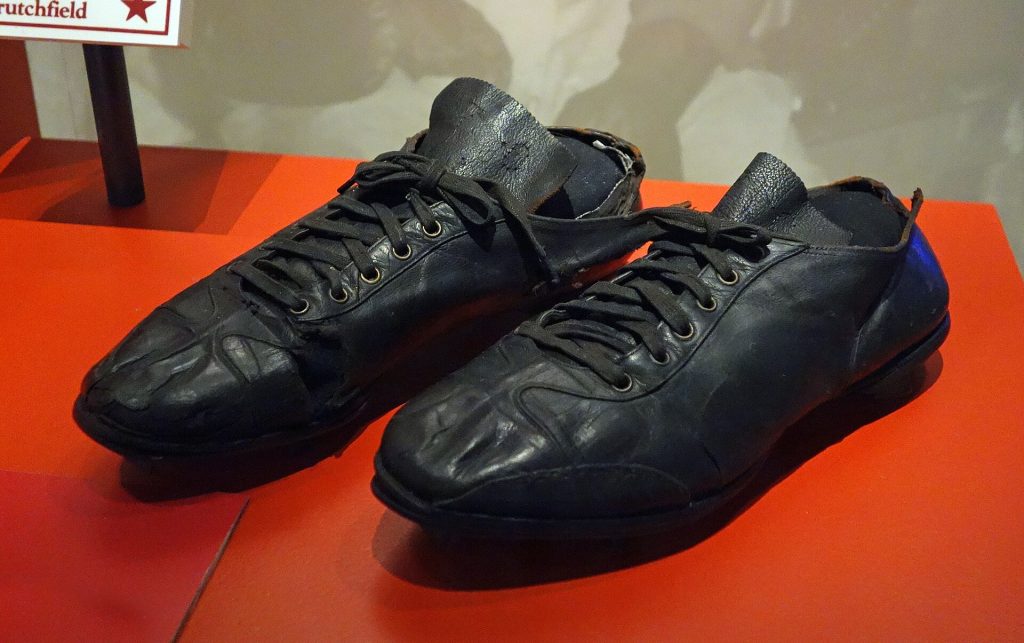
Wear is not the test. Half the shoes that come apart at the ball are worth a resole, and half the shoes that look fine are one wet week away from the bin.
What decides it is whether the part that failed can be replaced without disturbing the part that still works. A sole is replaceable; a collapsed midsole is not.
Four pairs of signals, each with the repair on one side and the exit on the other.
The cost question comes last, not first. A resole that costs a third of a new pair is worth it on a shoe that fits; the same bill on a shoe that never fit is money spent twice.
Tread gone at the ball, with a midsole that still springs
Worn tread is the easy case. If the outsole has gone smooth under the ball but the midsole behind it still presses back when you push a thumb in, a resole restores the shoe for a fraction of a new pair.
The stop signal is a midsole that stays dented after the thumb comes off, or feels crumbly at the edge. That is hydrolysis in a foam midsole, and it has no repair. A new outsole glued to dead foam will peel within months.
Feel along the sidewall as well. A midsole that has started to separate in layers is finished, no matter how good the upper looks.
Ask what the sole is made of before you decide. A stitched leather sole can be replaced three or four times; a moulded foam unit is bonded to the upper and comes away with the sole. Wear that is even across the ball is normal, while wear through one spot on the outside edge means the shoe is fighting your gait.
A split at the welt, not a tear across the vamp
A stitched sole that has begun to let go at the welt can be re-stitched or re-welted. The upper is intact, the insole is sound, and the repair is routine work for any competent cobbler.
A tear across the vamp is different. That is the panel taking the flex load, and patching it puts a stiff piece of leather exactly where the shoe needs to bend. It will tear again beside the patch.
Cracking that runs through the grain at the flex point counts as a tear. Surface scuffing at the toe does not, and a good polish will hide most of it.
Look at the gap with a torch rather than by eye. A stitch line that has opened two or three stitches is a small job; one that has run a third of the way round the waist is not.
A heel counter that has softened, not one that has collapsed
A counter that has lost stiffness can sometimes be re-stiffened with a leather insert, and the lining behind it can be patched. Worth doing on a pair with a good upper and a sound sole.
The stop signal is a counter you can fold flat with two fingers. Once the shape is gone the heel will not sit vertical, and no insert holds a foot that is rolling out of the shoe all day.
Check the insole at the same time. A footbed worn through to the midsole means the shoe has been absorbing impact with nothing in the way, and the whole structure is usually tired by then.
Press the counter from inside with a thumb while the shoe sits on a table. Movement there tells you more than any amount of squeezing from the outside. Deep creases across the toes are not a counter problem, and they will not stop a resole.
An adhesive failure you can see, not one you can feel
Cemented shoes fail at the bond line, and a lifted edge along one side is a clean reglue. Have it done properly with heat and pressure rather than with a tube of glue from a drawer.
The stop signal is a bond that has let go across the whole forefoot, or a sole that moves when you twist the shoe. That means the adhesive layer has aged through, and the foam above it is usually going the same way.
Water getting in through an open bond is what turns a reglue into a replacement. The foam soaks, the bond fails further, and the repair bill climbs while the shoe sits in the hall. Stand it in a bowl of water for a minute, dry the outside, and watch the seam for bubbles.
Fix the small separation the week you notice it. The pair that gets looked at early is the pair that gets a second sole.