Six shoes with replaceable footbeds and why that matters more than the sole

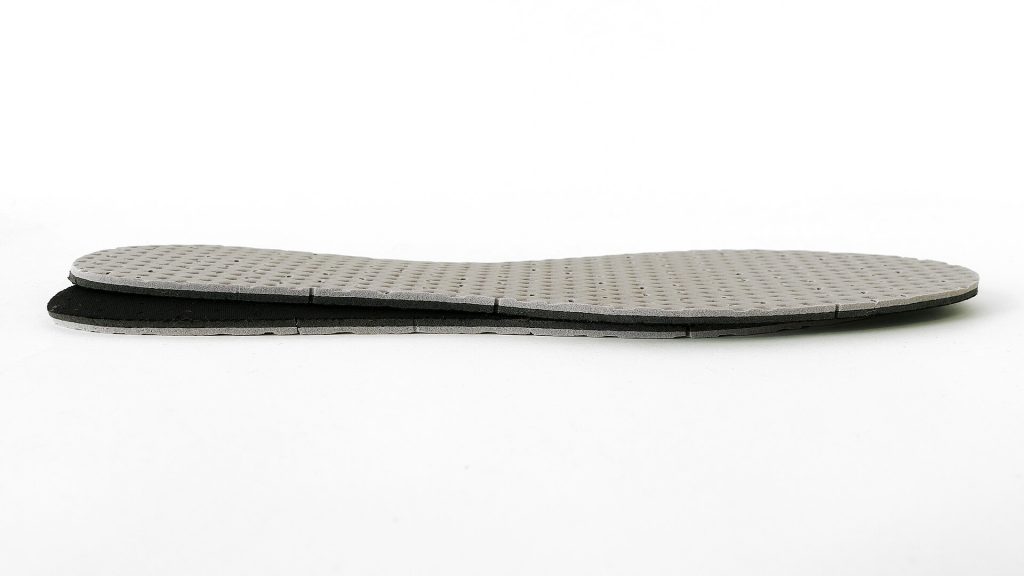
A replaceable footbed doubles the working life of a shoe, because the footbed is the part that dies first. The outsole usually has years left in it when the liner under the heel has flattened to cardboard.
None of that helps if the cavity is too shallow, the board beneath it is soft, or the liner is glued at the edge. The feature is only real when the space and the structure both support a replacement.
These six took a third party insole without lifting the heel or crowding the toes, and their original liners came out in one piece.
A cavity deep enough for a thicker insole
Most stock liners are three to five millimetres thick. A supportive replacement is six to eight, and the difference has to go somewhere inside the shoe.
Pull the liner out and look at the depth of the well. If the lasting board sits flush with the leather edge, there is no room, and a thicker insole will push your heel up and out of the counter.
Drop a coin into the cavity. If it sits proud of the rim by more than a couple of millimetres, that is roughly your spare volume.
A hard board under the liner, not foam
A removable liner is only useful if there is something firm beneath it. A fibreglass or leather lasting board spreads load across the whole foot. A foam layer under the liner just adds another soft thing to pack down.
Press the cavity with a thumb at the arch and at the ball. It should feel like a table with a thin cover, not like a mattress.
A foam base also means the shoe cannot be corrected. An insole with a built up arch needs a firm surface to push against, or it simply sinks into the shoe.
Test the board with a fingernail at the edge of the arch as well. If the nail sinks in, the layer underneath is foam, whatever the label calls it.
A liner that lifts without tearing the lining
Many liners are spot glued at the toe or the heel to stop them sliding. That is fine until you want to change one, and the glue takes the lining with it.
Work a finger under the edge at the heel and lift slowly. It should release with a light tack, leaving the lining intact. A liner that rips on the first pull was never meant to come out.
Check the rim of the cavity too. A raw, unfinished leather edge will cut into a replacement insole at the ball within a month of walking.
A toe box that has height to spare
Volume is the part people forget. A thicker insole raises the foot inside the shoe, and the toes then press against the top of the box.
Put the shoe on with the replacement in place and wiggle the toes. You want a few millimetres of clearance above the big toe, felt as space rather than as pressure.
If the vamp touches the top of the toes, the shoe is now too shallow. Take the insole out or take the shoe back.
Lacing cannot fix volume either. If the toes touch the top, loosening the laces only lets the heel slip instead, which trades one problem for a worse one.
A heel that stays locked with the new insole
Raising the foot lifts the heel relative to the counter, and a heel that was locked can start to slip. That slip wears the lining and lets the ankle roll.
Walk ten steps with the new insole and watch the heel. If it lifts more than a couple of millimetres, relace the top eyelets tighter before you blame the insole.
If it still lifts, the shoe has no volume for the swap, and no amount of lacing will create it.
An outsole that outlasts three liners
The point of all this is arithmetic. If the outsole lasts four years and each liner lasts eighteen months, a replaceable footbed turns one shoe into two and a half shoes.
Look at the outsole thickness at the heel and compare it with the liner. A shoe with a thin glued sole and a removable liner has the feature in the wrong order.
Heavier welted shoes and good walking shoes usually get this right. Light fashion sneakers usually do not, whatever the marketing says about comfort.
Two liners is the realistic figure for most walking shoes. Three is what a thick outsole actually buys you, and it is worth paying for once.
Pull the liner out in the shop and look at what sits underneath. That single action tells you more about the shoe’s life than the upper, the name or the price.
Buy the shoe with the deep cavity and the hard board. The insole you put into it will be the part you replace, and that is exactly the point.