Five waterproofing sprays tested against a real winter

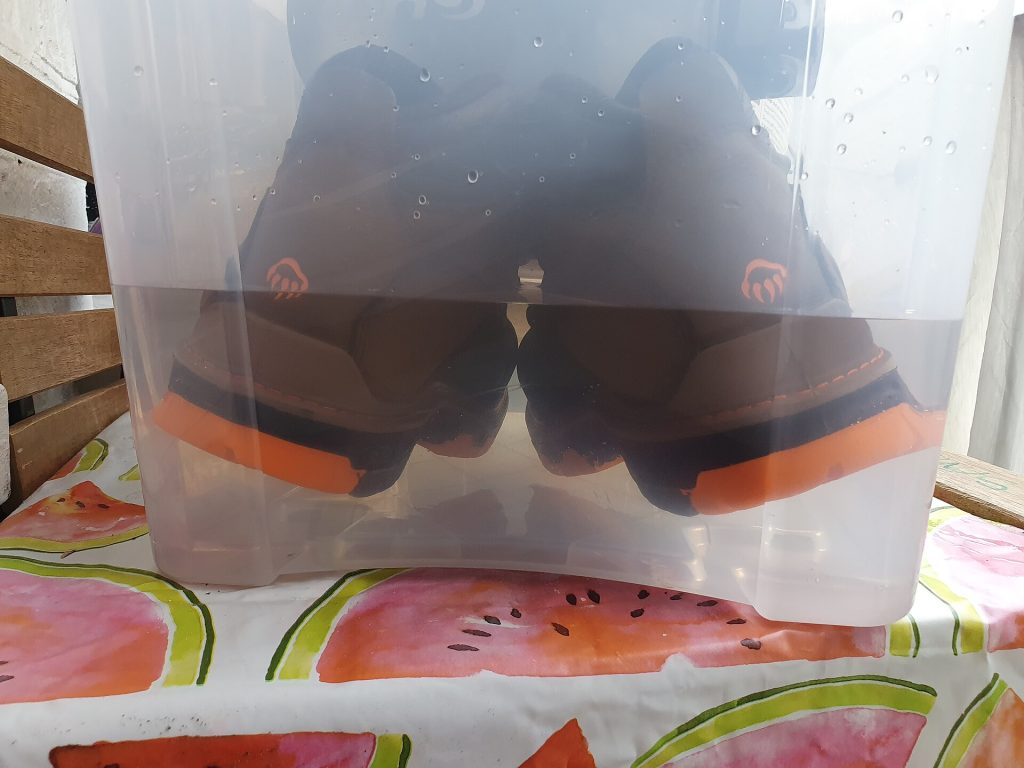
Most waterproofing sprays do not waterproof. They raise the surface tension of the leather so water beads and runs off, which keeps the upper from soaking through but does nothing for a seam that is already leaking.
That distinction decides which product belongs on which boot. A breathable membrane needs a finish that lets vapour out; a plain leather boot needs a barrier that keeps liquid out and does not care about vapour.
Five types, what each did over a winter of slush, road salt and freeze-thaw.
Fluorocarbon finishes bead hardest and still breathe
These lower the surface energy of the leather so droplets sit up instead of spreading. The coating is thin enough that vapour still passes, which is why they suit a boot with a membrane inside.
They last through several wet wears before the beading weakens, and the failure is gradual rather than sudden. When water stops standing in beads and starts darkening the panel, it is time to reapply.
Apply outdoors, two thin passes, ten minutes apart, on clean dry leather. One heavy pass runs, pools in the seams and leaves a stiff patch that cracks later.
Do not judge a finish by how it looks wet. Beading tells you the surface is still working; a dull patch that stays dark after the water runs off tells you the panel underneath has already taken it in. Two coats a season is the usual rate for a boot worn daily, and a year for one worn twice a week.
Wax sprays need warmth and clog the grain
Wax sits on the surface and blocks liquid physically. It works well on smooth full-grain leather and handles salt better than a fluoro finish, because the salt sits on the wax rather than in the panel.
The cost is breathability. A waxed upper traps moisture from the foot, so a boot worn for a full shift ends the day damp inside even though nothing got in from outside.
Warm the leather first with a cloth or a hand, not a heat gun. Cold wax sits in a film on top and flakes off at the flex point within a week.
Brush the boot before every reapplication. Wax laid over grit binds the grit into the film, and the film then wears through in patches instead of evenly.
Silicone sprays seal the panel and stop the membrane working
Silicone is cheap and beads beautifully for the first few days. It also forms a continuous film that blocks vapour, so a breathable boot stops breathing and the damp moves to the lining instead.
The film goes cloudy where the upper flexes, and it collects dirt that is very hard to get out. On suede it mats the nap permanently.
This is the one to avoid on any boot with a membrane, and the one to avoid entirely if the upper is aniline leather. It darkens the finish unevenly and there is no way back short of a refinish.
If a pair has already been treated with it, a saddle soap wash and a stiff brush will take most of the film off. The panel feels different at once: less slick, more like leather.
PFAS-free finishes work, and need reapplying more often
These rely on shorter polymer chains and often on a carrier that evaporates fast. Beading is good on the first wear and noticeably weaker by the third or fourth wet day.
Treat them as a routine rather than a season-long coat. Two light passes before a wet week, and again as soon as the surface starts to darken instead of beading.
The advantage is that they do not build up. A fluoro finish layered year after year leaves a stiff film; these wear away and can be replaced without stripping.
Spray the seams and the tongue gusset, not just the toe
Water almost never enters through the middle of a panel. It enters at the welt seam, the tongue gusset and the eyelet row, and those are the places a quick spray at the toe misses.
Work the nozzle along every stitch line, and hold the tongue out so the gusset gets coated on both faces. Pay for the seams first and the cosmetics second.
Let the boot dry a full day before wearing, and never spray a wet boot. The carrier will not flash off, the finish will not bond, and the whole coat is wasted.
Use a narrow nozzle and keep it moving. A held spray point soaks one spot and leaves a dark ring that dries hard and shows through the polish. A boot that still leaks after two proper coats has a structural problem, not a coating problem, and no spray fixes a split welt.