Six sandals with enough structure for a full working day

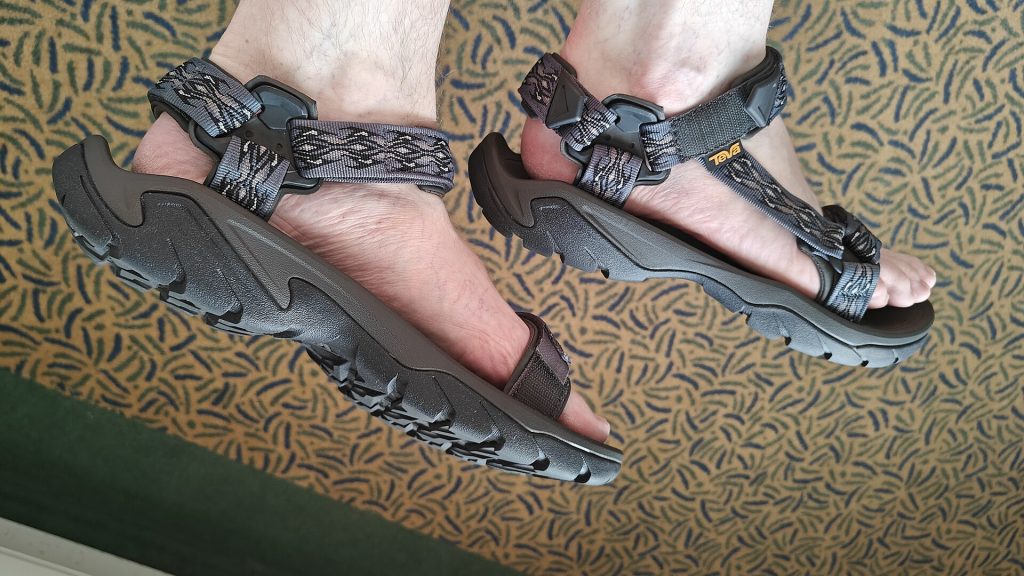
A sandal can carry a full working day if the footbed is shaped like a foot and the straps hold the heel in place. Most sandals fail because the straps only pull backward and the foot slides forward until the toes are gripping the front edge.
The footbed does the supporting and the straps do the positioning. Get the positioning wrong and even a well shaped cork bed will feel like standing on a slope by the afternoon.
I wore each pair for a month of eight hour days on tile and pavement, with a minimum of four kilometres of walking inside the shift, and checked the footbed for compression at the heel and the ball.
A cork and latex footbed with a real heel cup
Cork granules bound with latex compress slowly and hold a shape once they have taken one. A footbed of cork composite with a heel cup of ten millimetres starts supportive and gets more so.
Press the heel area with a thumb. Firm cork resists and shows a fine texture. Soft cork or foam blends dent and stay dented, and the cup disappears in a month.
Look at the underside after a month of wear. Cracks running across the cork mean it is drying out, and a dry bed will crumble at the ball first.
An instep strap that pulls the foot back into the heel
The strap across the top of the foot should angle back toward the heel, not straight across. That angle pushes the foot rearward every time you tighten it.
Put the sandal on and tighten that strap. Your heel should move back into the cup, not lift out of it. If tightening lifts the heel, the strap is anchored too far forward.
This is the single most common fault in a good looking sandal, and it is the reason people walk with their toes curled.
A toe post set behind the first two toes
A toe post that sits too far forward forces the toes apart and rubs the gap raw. Set properly, it sits in the natural space and lets the forefoot relax.
Stand on the footbed without fastening anything and look at where the post lands. It should be between the first and second toe, close to the web, not out near the tips.
If the post is leather, check the edge for a rolled finish. A cut edge will abrade the skin within two days of a working week.
A shank hidden under the cork
Cork alone bends at the waist under a full day of standing. A thin steel or composite shank under the footbed keeps the sandal from folding in the middle.
Hold the sandal by the heel and press the ball down. The waist should stay flat. A sandal that folds like a taco has no shank, whatever the marketing says about arch support.
Shanks also protect the cork. A supported bed cracks far more slowly than one that is flexed thousands of times a shift.
A back strap that stops the heel from sliding
Slides are for the beach. For a working day you want a strap behind the heel, or a cup deep enough that the heel cannot travel.
Walk ten steps and watch your heel. Any vertical lift is a sandal that will cause a blister on the back of the heel by the end of the week.
A back strap should sit low, below the ankle bone, and be wide enough not to cut. Thin cords look minimal and dig in after an hour.
A heel lug of four millimetres on a rubber outsole
Wet tile and smooth pavement are where sandals actually fail, and a flat leather sole has no answer. Four millimetres of rubber with a shallow pattern is enough for a city day.
Press a thumbnail into the rubber at the heel. It should mark slightly and spring back. Hard shiny rubber on a smooth sole is a slip waiting for a wet floor.
Check the wear pattern after a month. Even wear across the heel means the foot is landing flat, which is what you want. Wear on one corner means the straps are not holding the foot straight.
Six sandals is a short list because the shape of the footbed is hard to fake and easy to feel. Stand in a pair for ten minutes before you buy, with the straps done up. Most people leave the shop with the one that looked best on the shelf, then work a week in a sandal that never had a chance.
If your toes are gripping the front edge, put the sandal back.