Six sizing rules that stop the heel from slipping

A heel that slips is a volume problem in most cases, not a length problem.
The shoe is long enough. It is too roomy through the heel and the instep, so the foot travels back with every step and the counter never gets a grip. Sizing down shortens a shoe that was already the right length and moves the rub to your toes.
Six checks, in the order I run them across the counter.
Measure on paper, late in the day, standing
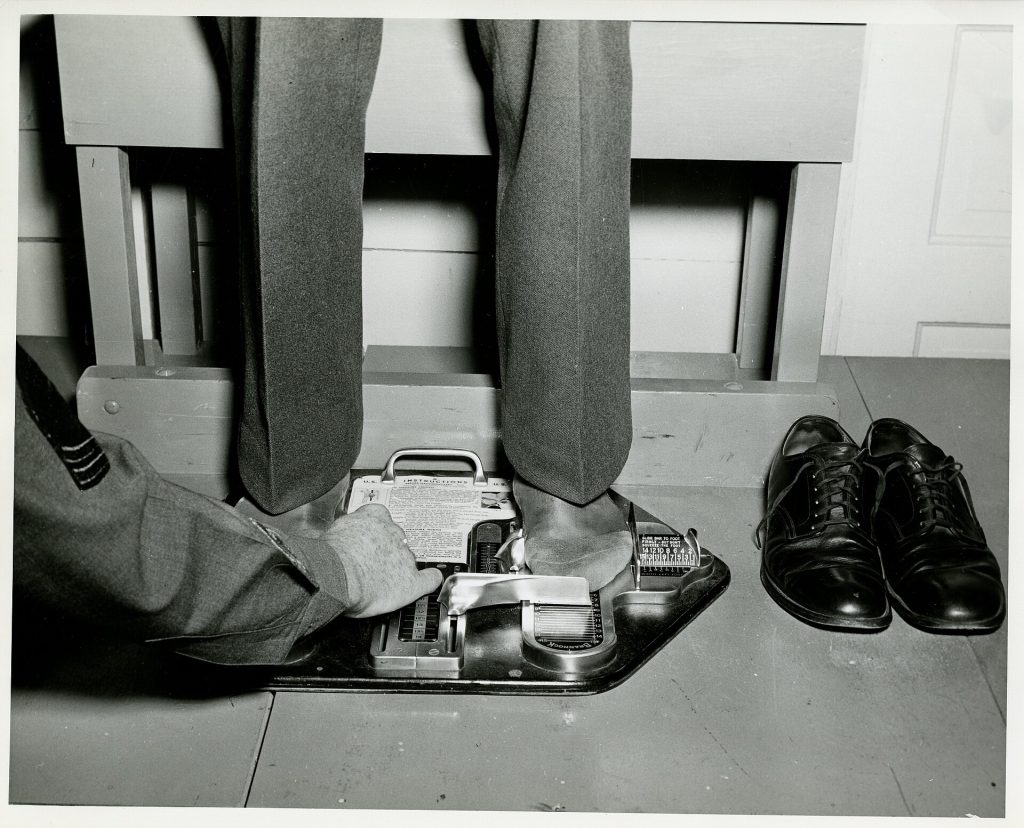
Feet spread under load and swell through the afternoon. Trace both feet on a sheet of paper while standing with the heel against a wall, then measure from that line to the longest toe.
Do the same across the widest part of the forefoot and write down four numbers, two per foot. Nearly everyone is two to four millimetres longer at six in the evening, and one foot is usually longer than the other.
A pair chosen from a morning tracing will be short by the end of a shift. That shortfall shows up as a hot spot on the big toe rather than as heel slip, which is why people keep buying the wrong size for years without noticing the pattern.
Read the width at the ball before the length on the box
Length tells you where the shoe ends. Width at the ball tells you whether the foot can sit far enough forward for the heel to reach the back of the shoe.
On a narrow last, a foot with a wide forefoot rides backwards until the ball clears the widest point, and the heel lifts because the foot is no longer seated in the heel cup. The length is correct and the geometry is wrong.
If the widest part of your foot sits ahead of the widest part of the shoe, no lacing will hold the heel down. Try a wider fitting in the same length before you try a shorter one.
Judge heel width against the counter, not against the size
Slide a finger down each side of the heel with the shoe laced. It should meet the counter on both sides at once. If one side takes the finger and the other does not, your heel is narrower than the last assumes.
A heel that is narrow relative to the shoe will always move, and a counter cannot clamp what it does not touch. Look for a last described as narrow at the heel, or a padded collar that closes the gap without pushing the foot forward.
The opposite case matters as much. A wide heel forced into a narrow counter feels locked in the shop and burns the Achilles tendon by the second week, which is a worse problem to fix than a slip.
Try the pair in the sock you will actually wear
A thin dress sock and a cushioned trainer sock differ by about half a size of internal volume, and volume is the thing holding your heel down.
Bring the sock to the shop. Try the shoe at the end of the day and walk on the hard floor rather than the carpet, because carpet grips a loose sole and hides the movement you are trying to find.
If a shoe only holds with a thick sock, it is the wrong shoe for the sock drawer you own. Buy for the thinner sock and the fit will still be there in July.
Test the hold on a slope with the laces tied
Stand on the ball of one foot with the heel raised, laces tied, then walk up an incline or a stair. Weight forward is where a loose counter gives itself away.
Two or three millimetres of lift is normal and will settle as the sole breaks in. A heel that clears the footbed by more than that, or that makes an audible clap on the floor, will not settle.
Repeat with the shoe unlaced and the heel pushed to the back. If the foot slides forward on its own, the shoe is too long whatever the measuring device said.
Fit the longer foot and correct the shorter one
Buy for the longer, wider foot and take up the difference on the other side with a thin insole or a tongue pad. Buying for the shorter foot guarantees a rub on the longer one.
A heel grip on the smaller foot is legitimate. Two pairs of socks, paper crammed into the toe and a shop assistant bending the shoe over a counter are not, and the last of those cracks the counter board.
The final test is a full lap of the shop at the end of the day in the right sock. If the heel stays down on the slope and the ball sits in the widest part, the size is right.
A heel that still slips after all six checks is a last shape problem. The honest answer is a different shoe, not a thicker sock, and no insert will turn a wide heel seat into a narrow one.
Try the next width down in the same length before you try the next size up.