Five ways to lift salt stains without wrecking the finish

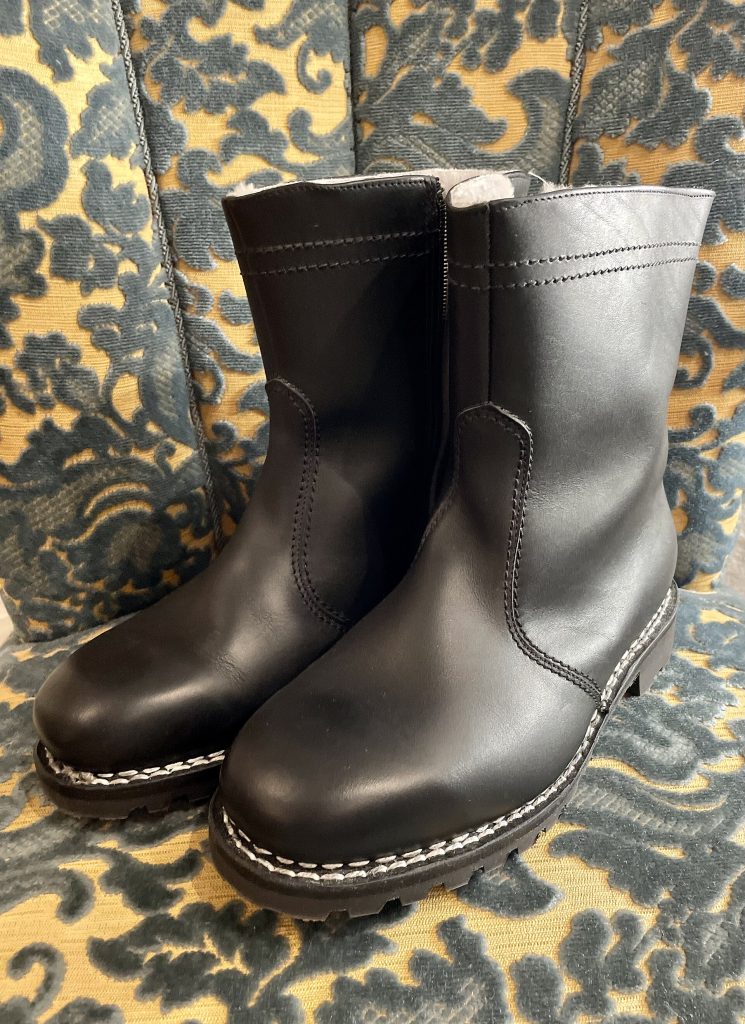
Salt does not stain leather. It pulls moisture toward itself, dries the panel out from underneath, and leaves a white ring of crystal where the water evaporated.
That matters because the ring is not dirt. Scrub it like dirt and you drive the salt deeper into the grain, where it keeps absorbing water from the air and keeps the leather damp at the flex point.
The order below works on smooth leather and on most finished boots. It does not work on suede, which needs dry methods and a different article.
Let the boot dry completely before you touch it
Wet salt spreads. Wipe a damp boot and you move the saline solution sideways into clean leather, and the tide mark ends up wider than the original stain.
Paper in the toe, room temperature, overnight at least. If the boot came in soaked, give it a full day and change the paper once. Do not use heat to speed this up, because heat fixes the salt into the grain.
Salt works while it is wet. A boot that came home white and gets wiped within the hour is easy; one that sat in a warm hall overnight has already drawn moisture in and pushed crystal down into the grain.
Dissolve with weak vinegar and blot, never scrub
Salt is water soluble and the white ring redissolves in a mild acid faster than in plain water. One part white vinegar to three parts water is enough; stronger does not work better and smells worse.
Dampen a cloth, press it on the ring for a few seconds, lift. Work from the outside of the ring inward so you are not pushing salt into the clean panel. A brush at this stage grinds crystal across the finish.
If the ring has dried hard, dampen the whole panel edge to edge rather than the ring alone. A partial wetting dries unevenly and leaves a fresh line just outside the old one.
Test on the inside of the tongue first. Vinegar is harmless on most pigment finishes and mildly risky on aniline, which darkens at the touch of almost anything wet.
Rinse with clean water and blot dry, then dry flat
Vinegar left in the leather is its own problem, and so is the salt you just lifted sitting on the surface. One pass with a clean damp cloth removes both.
Blot with a dry towel, stuff the toe, and let the pair sit flat rather than propped against a wall. Drying at an angle lets the residue run to one edge and dry there as a line.
Two or three rounds beat one heavy soak every time. If the ring is still there after the third, stop and let it dry overnight before judging, because salt rings look worse wet.
Work one panel at a time and finish it before moving on. Half-rinsed panels dry with a tide line exactly where you stopped, and that line is harder to shift than the salt was.
Condition the panel once it is dry, not before
Salt has been pulling water out of the leather for hours. The panel will feel stiff and slightly rough under the thumb, which is the signal that oil needs replacing.
Wait until the boot is genuinely dry, then a thin film of conditioner over the affected area and a little beyond it. Conditioning a damp panel traps water under the oil and turns a white ring into a dark patch.
Skip this and the salt comes back faster next time, because dry leather absorbs the next salting more readily than leather in condition.
A neutral cream is safer than a coloured polish on a panel that has just been wet. Salt leaves the finish slightly porous, and pigment settles into those pores as a darker patch that only shows in raking light.
Keep the salt off the leather in the first place
A wax barrier on the lower third of the boot does more than any cleaning routine. Salt sits on the wax and rinses off with the slush instead of soaking in.
Apply two thin coats before the season, and reapply where the flex creases appear. Avoid silicone products here: they seal the panel, stop it breathing and leave a cloudy film that shows every scuff.
Rinse the boots with cold water when you come in from a salted street. Cold, not warm. Warm water opens the grain and takes the salt in with it.
The ring that comes back in the same place every year is not a cleaning failure. It is a sign the barrier never reached that panel. Two seasons of that routine and the ring stops forming at all, which is a better outcome than anything a cleaning method can give you after the fact.