Four EVA midsoles that keep their rebound instead of packing down

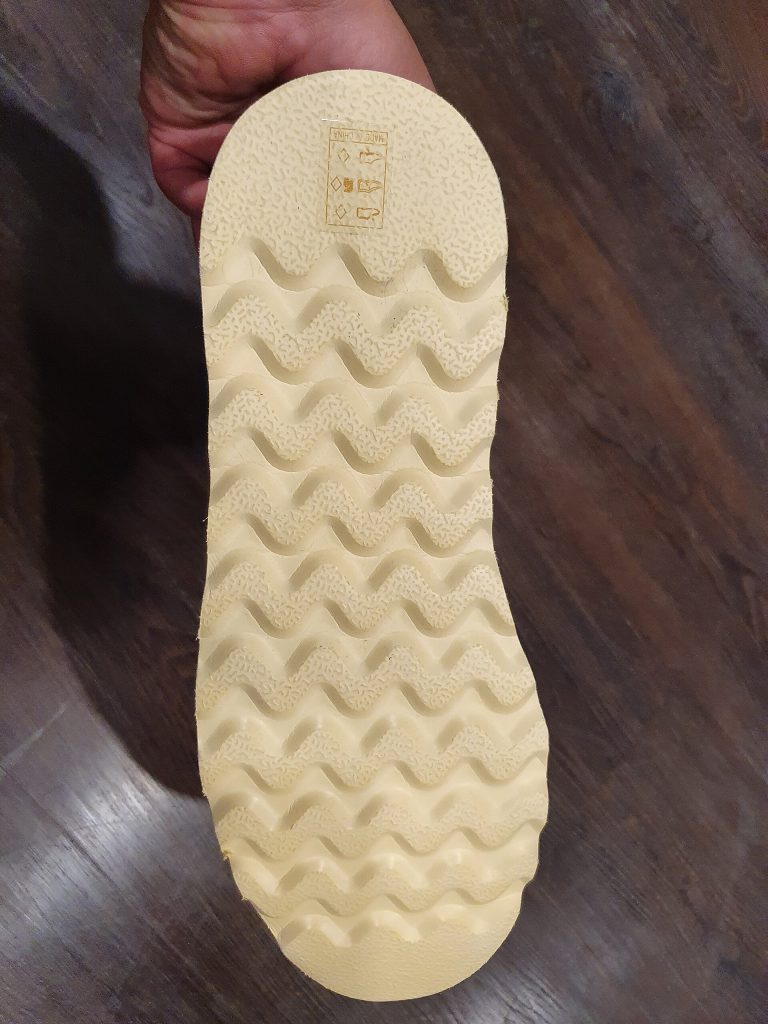
EVA does not fail by wearing out. It fails by remembering. Every step compresses the foam a little, and a foam that does not spring fully back carries a compression set that grows with every mile.
The difference between a midsole that lasts a year and one that lasts three months is density, cell structure and how much foam sits between the foot and the ground. All three are readable before you pay.
These four pairs still returned energy at month ten, on the same routes and the same body weight.
Rebound is measurable, but not with a single squeeze. What you are really testing is whether the foam returns to its original height after load, and that is a property you can watch fail on a used pair in a minute.
A foam dense enough to resist compression set
Low density EVA is light, cheap and packs down in weeks. The working range for a walking midsole is roughly 0.15 to 0.25 grams per cubic centimetre, and it is the upper half of that range that survives.
You cannot read density off the box, but you can feel it. A dense slab resists a thumb press and rebounds at once. A light one dents easily and comes back slowly, or not at all.
Shoe weight is the tell in the other direction. Two pairs in the same size, one noticeably lighter, usually means less foam rather than better foam.
Blends matter as well. A midsole with a share of TPU or a rubberised copolymer keeps more of its height than plain EVA, because the harder phase creeps less under a long, slow load.
A slab thick enough to spread the load
Compression set is a function of strain. A thin midsole is asked to absorb the same force through less material, so each cell is squeezed harder and stays squeezed.
Twenty five millimetres under the heel and fifteen under the forefoot is a sensible walking stack. Under twenty at the heel, most foams bottom out beneath a heavy walker within a season.
Bottoming out has a feel of its own: a hard stop under the heel, felt up through the arch, as if you were stepping on the insole board. That is foam compressed to its limit, not cushioning.
Thickness also decides where the shoe bends. A thick stack at the heel that thins abruptly at the ball creates a stress line, and that line is where these midsoles split first.
A sidewall that creases and recovers
Press a thumbnail into the side of the midsole and hold for five seconds. Release and count. A healthy foam erases the dent within a few seconds. A packed foam keeps a pale mark.
Then look at the crease lines on the lateral side after a month. Horizontal wrinkles that stay raised mean the foam is folding rather than compressing. Deep folds with a white line along the bottom are the start of a split.
The same press test works on a used pair in a charity shop, which is where most of us meet a midsole that has already done all its work.
Look at the inner side too. A midsole that has packed down on one side only is telling you about the shape of the footbed rather than the foam, and no new liner will fix that tilt.
Feel matters less than people think. A pair that feels dead under the thumb in the shop will not improve with a month of walking, and a pair that feels springy today is not proof of anything at month twelve.
A shoe that does not cook the foam
EVA softens as it warms. A midsole left in a hot car or beside a radiator loses height faster than one stored cool, and that loss is permanent.
Heat also accelerates hydrolysis in the polyurethane foams used in some midsoles. Those crumble into powder rather than packing flat, and no repair exists for that failure at any price.
If the midsole feels sticky, or a fingernail takes a crumb out of it, the foam is finished. That is the one case worth walking away from rather than resoling around.
Storage is the free part of midsole life. A shoe tree, a cool cupboard and a day of rest between wears will do more for the foam than any spray sold for the purpose.
A midsole is a consumable, like a tyre. The honest question is not whether it will pack down, but how many months of walking you get before it does.
Buy the heavier, thicker slab, keep it out of the boot of the car, and replace the liner at the six month mark. The foam underneath will then last long enough to be worth the money.