Five toe box shapes and which foot type each one suits

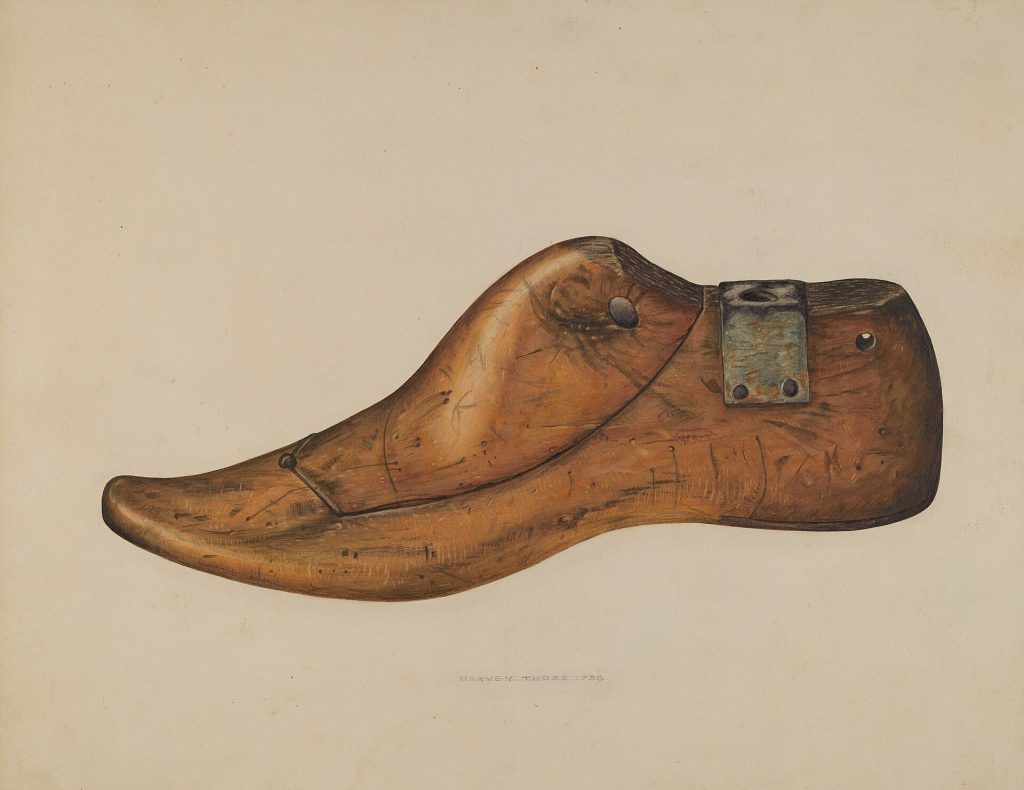
A toe box should follow the shape of your toes when your foot is loaded, not the shape of the shoe in the window.
Almost every toe problem I see starts with a box that tapers earlier than the foot does. The shoe is the right length, the toes are crowded anyway, and the remedy people reach for is a bigger size, which makes the heel loose and the crease land in the wrong place.
Five shapes, and the foot each one actually suits.
Round and full, the safest shape for most feet
A round box gives depth over the toes and width at the joints, and it tapers only at the very end. On a last with a generous ball girth it suits the widest range of feet, including a broad forefoot with a narrow heel.
Look at the outline from above: the widest point should sit at the ball, roughly a third of the way back from the tip. If the shoe is widest halfway along the foot, the toes are being squeezed into a box built for the arch.
The trade is bulk. A round box looks larger than the foot inside it, which is why it loses to a tapered shape in a display window and wins on a shift.
Depth matters as much as outline. A round box two millimetres shallower than your toes need will still polish the nail, and depth never appears on a size label or a fitting chart.
Almond, for a foot that tapers late
An almond toe is round at the joints and comes to a soft point rather than a curve. It suits a foot whose toes shorten gradually from the big toe outward, the commonest pattern in most populations.
Check the taper point by pressing a thumb along the top of the box. If the ceiling starts to drop before your toe joints, the almond is cut too early and will press on the tops of the toes rather than the sides.
This is also the shape that tolerates a slightly longer second toe, provided the taper is gentle. A sharp almond does not, and that distinction is invisible until you stand up.
Square, for an even toe line or a bunion
A square box holds its width to the tip and then turns a corner. It suits a foot whose first three toes are close to the same length, and it is the only shape that gives a bunion any real relief.
The straight inner edge lets the big toe joint sit without being pushed inward, which is what a tapered box does with every step. If the joint is already sensitive, this is the shape to start from rather than the one to graduate to.
Watch the corners. A square box that is too short will rub the little toe and the big toe at once, and the fit cannot be rescued by lacing or an insole.
Check the seam position as well. A square box with a hard seam across the top of the toes wastes the room it gives, because the stitching sits exactly where the toes rise under load.
Tapered, for a narrow forefoot and a short day
A tapered box narrows steadily from the ball to a point. It suits a narrow forefoot with a long second toe, and it is the least forgiving shape in the shop.
Wear it for a dinner, not a shift. The taper puts the little toe against a wall as soon as the foot spreads under load, which happens within twenty minutes of walking and does not reverse while the shoe is on.
Sizing up to make a taper comfortable is the common mistake. It moves the widest part of the shoe forward, past your ball, and leaves the heel loose in a shoe that already has no spare volume at the back.
Oblique, for a straight big toe
An oblique box angles the tip inward from the big toe side and follows the natural line of the foot. It suits a foot where the big toe is clearly the longest and the others fall away sharply behind it.
It gives length where the foot needs it and holds width at the joint, which no symmetric box can do. The asymmetry looks odd on the shelf and disappears once the shoe is on the foot it was built for.
Try it against a round box in the same size and walk both. The difference shows up at the tip of the big toe within a minute, and it is the clearest demonstration of why shape matters more than the number on the sole.
A pointed shoe is not automatically a bad one. It is a shoe for a specific foot and a specific two hours, and judging it by a full working day is judging the wrong thing.