Five shoes for teachers who are on their feet from first bell to last

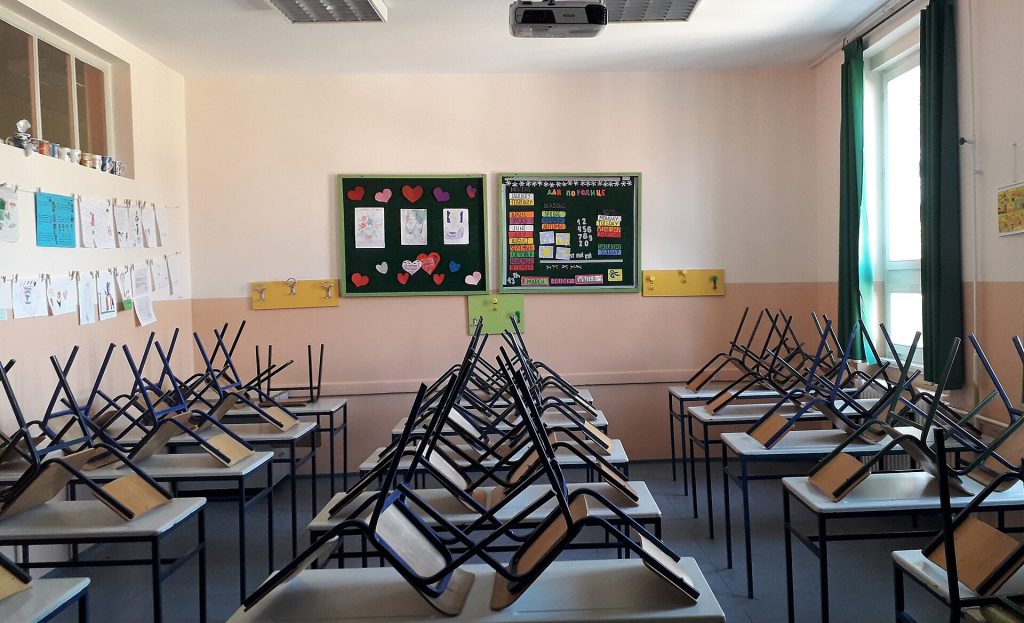
A teacher’s day is not walking and it is not standing. It is a hundred small transitions, and the shoe has to handle every one of them without a single one hurting.
The room is waxed vinyl, the corridor is the same, the stairs are concrete with a metal nosing, and one classroom has a carpet that grabs at the sole. You cross all four surfaces before lunch, usually at speed.
I taught a month in each pair, five days a week, and counted stair flights rather than steps. These five are the ones that had not announced themselves by period four.
An outsole that grips waxed vinyl and carpet with the same edge
These two floors want opposite treads. Carpet wants shallow blocks that bite into the pile; waxed vinyl wants a flat, soft rubber that does not skate on the polish.
A fine, all over texture with rounded blocks and a soft compound is the compromise that works. Deep lugs skate on vinyl and drag on carpet, which is the worst of both.
Walk from a carpeted room into the corridor at speed and stop. If the shoe slides the last 100 mm, it will do exactly that in front of a class.
A quiet heel that does not announce you
A hard heel on a hard floor is a metronome, and in a quiet corridor it is the loudest thing in the building. It also transmits every impact straight into the heel pad.
Look for a rubber top piece, or a heel with a rubber insert, at least 8 mm thick. A bare plastic heel is loud and wears into a click within a term.
Tap the heel on a tile in the shop. If it rings, it will ring down a corridor of thirty doors, and you will hear it in your sleep by October.
A worn top piece is also a slip. Once the rubber is gone and plastic shows, the heel loses grip on a stair nosing, and that is a fall in front of a full class.
A collar that does not gap when you crouch
Teachers crouch to a desk, kneel at a low shelf and sit on a child’s chair. Every one of those pulls the heel up out of the shoe if the collar is low or soft.
A higher, padded collar and lacing that reaches back over the instep keeps the heel seated through a crouch. A low slip-on will not do it, whatever the elastic panel promises.
Crouch fully in the shop and stand back up. If you have to push your heel down with a finger, the shoe will cost you that motion forty times a day.
A low, rounded toe that clears a stair nosing
Stair nosings sit proud of the tread by 5 to 10 mm. A long, square toe catches one, and you go down with a tray of marking in your arms.
A toe spring of 10 to 15 mm and a rounded profile clears the nosing without lifting the foot early in the step and tiring the shin.
Watch the toe bumper after a month. Scuffing right across the front means you are catching, and the next catch will be on a stair rather than a threshold.
An upper that recovers from a crease five days a week
A teaching shoe is worn more often than any other work shoe, and it shows creases before it shows wear. A crease that stays is a shoe that looks tired by half term.
Full grain leather with a light finish springs back; corrected grain and thin coated splits hold a hard white line in the fold and never lose it.
Crease the vamp with a thumb and release. Slow, full recovery is what you want, and it also tells you the leather has not been over finished to hide a cheap hide.
A footbed you can replace mid year
Teachers are on their feet for the length of a school year, not a season. The footbed will be the first part to flatten, usually by the second term.
A removable liner lets you put a fresh one in for the spring term without buying another pair. Check that the cavity under it is flat and that the liner has a heel cup.
If the liner is glued in and has gone hard under the ball, the shoe is finished, because that is where the whole day is carried.
Buy for the transitions, not the standing. The teacher’s shoe fails at the door of a classroom, not at the board.
A quiet heel, a grippy edge and a collar that holds through a crouch will do more for a school year than any amount of foam.