Five nubuck shoes and what a winter actually does to them

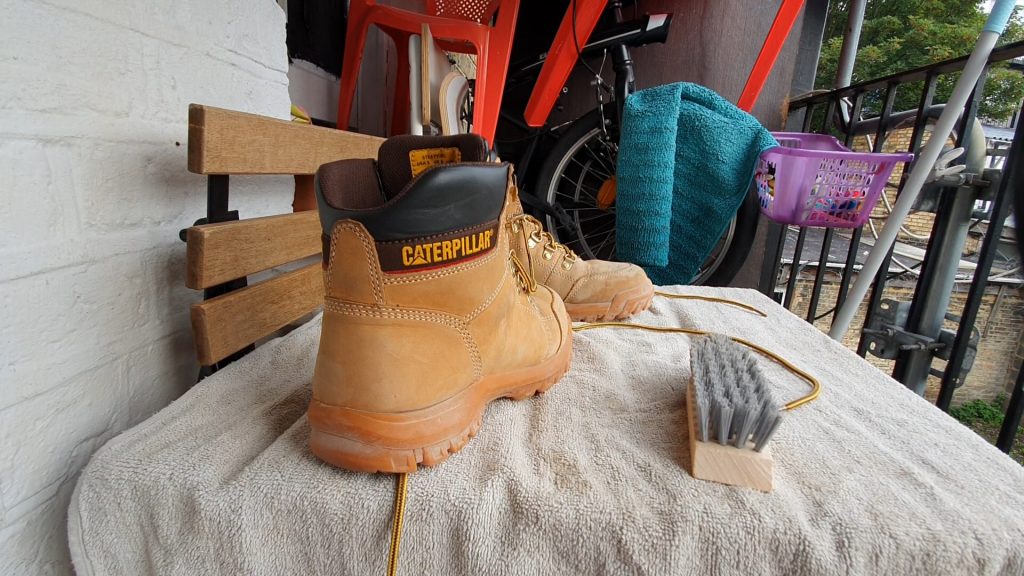
A winter does more damage to nubuck than a year of summer wear, and most of it comes from salt rather than from water. Water dries out; salt stays and works.
Nubuck is full grain leather buffed on the outside, so the nap is short and the fibre beneath it is dense. That density is why a nubuck upper feels soft and still holds shape.
Salt crystallises inside the nap. The crystals are abrasive, and every step grinds them through the fibre ends, so the grey tide line that appears in February is physical damage rather than a stain.
A nubuck chukka with an oiled finish
An oiled nubuck resists water at the fibre level and sheds slush before it soaks in. Salt still sticks to the oil, but it sits on the surface instead of inside the nap.
The oil also holds grit. A chukka worn through a city winter picks up a grey film that looks like salt damage and is mostly road dust suspended in the oil.
Wipe with a damp cloth and let it dry fully before brushing. Brushing first drives the grit down into the nap, and it takes a second wet cycle to lift it out.
Oiled nubuck also darkens where it bends and stays darker. That pattern is honest, and it is the reason these shoes look older in one winter than in three summers.
A nubuck hiker with a gusseted tongue
A gusset keeps snow out of the shoe, which is the difference between wet feet and a wet upper. An upper can be dried and reshaped; the inside of a boot cannot be fixed so easily.
The gusset seam becomes a water path if it is only cemented. Stitched and sealed is the standard to look for on anything meant for slush.
Pull the tongue sideways and look at the fold. A sealed seam stays flat under tension, while a cemented one opens as a thin white line along the stitching.
Check the height of the gusset as well. One that stops below the ankle lets snow in over the top, and the boot then wets from the inside where nothing can be done.
Salt also creeps up the laces. Cotton laces wick brine to the eyelets, and the leather around each eyelet dries into a hard pale ring.
A nubuck chelsea with a sealed seam
Fewer seams mean fewer places for salt to collect. A chelsea has one seam at each elastic panel and one at the back, and all of them can be sealed.
The elastic is the weakness. It absorbs salt water and holds it against the leather, and the leather behind it goes hard without ever looking wet.
Stretch the elastic and inspect the leather underneath. A pale, stiff band there means salt has been sitting against the upper for a long time.
The elastic itself also ages in salt. It loses rebound, stays stretched, and then the whole shoe fits loosely in a way no insole will correct.
A nubuck winter boot with a rubber rand
A rand moves salt contact up and away from the welt, which is where most crystallisation happens. It also takes the abrasion from slush and from grit on a pavement.
Rands hide the damage they prevent. The leather just above the rand gets no air and stays damp for hours longer than the rest of the upper.
Check the gap between rand and upper after a wet week. A visible line of salt in that gap tells you the boot is not breathing where it matters.
A stitched rand is the better construction here. Bonded rands lift at the toe first, and the gap they leave collects exactly the salt water you were trying to keep out.
A nubuck derby with a short nap
A short nap gives salt less fibre to bind to, and it brushes out cleanly once the leather is dry. Long naps trap crystals at the base where no brush can reach them.
Short nap shows scuffs more readily, which is a fair trade in a place that salts its roads six months of the year.
Rub the surface with a dry finger. A short nap barely moves and leaves a faint directional mark; a long nap ruffles like a carpet and stays disturbed.
Brush one patch against the nap and then with it. The two directions should feel different under the hand; if they feel the same, the nap has already been worn flat.
Winter is a salt test rather than a water test. A nubuck shoe that handles slush will still fail in February if salt can reach the nap and stay there.
Buy the seam and the rand, not the spray. Those two decide whether the upper survives to March with its surface intact.