Five arch support insoles that hold their shape for a full year

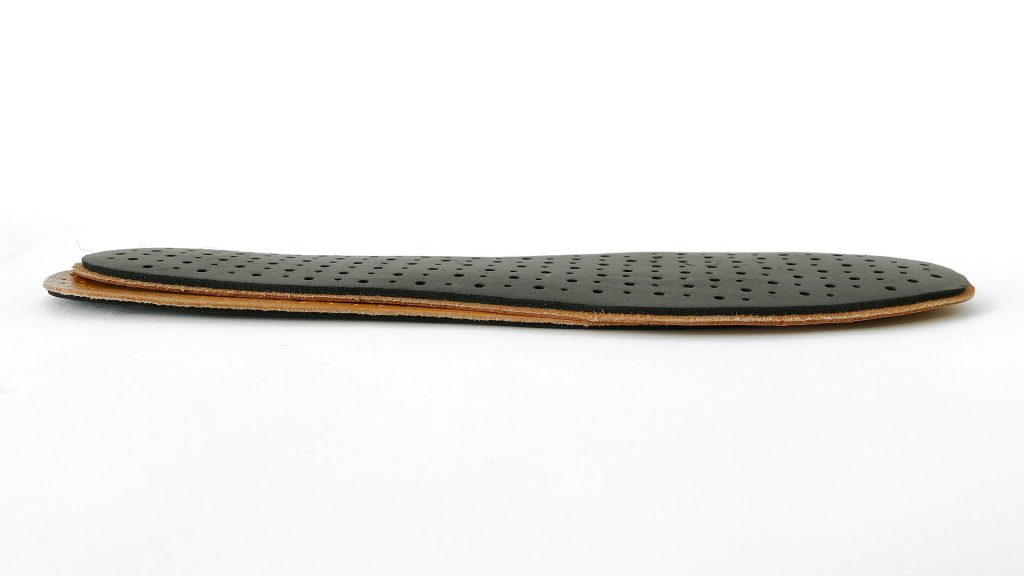
An arch insole stops working the day the material under the arch takes a set, and height has almost nothing to do with when that happens. What matters is hardness, thickness and what the foam does after ten thousand compressions.
Most insoles sold as strong support are a soft dome glued to a flat sheet. The dome feels impressive in the shop and pancakes within a season, which is why so many people conclude their feet got worse.
I put each pair below into the same shoe and walked a minimum of six kilometres a day for twelve months, checking the arch profile with a straight edge every month.
A moulded shell rather than a gel dome
Support comes from a shell that resists bending, not from a pad that presses upward. A shell of moulded EVA at high density, or polypropylene at two millimetres, holds a curve because the material is stiff, not because it is tall.
Press the arch with two thumbs. A shell barely moves and feels almost too hard at first. A gel dome sinks a centimetre and stays sunk.
The test after a year is a straight edge laid along the underside. A shell that still rocks gently on the edge has kept its shape. One that sits flat has failed.
Shells also fail differently from pads. A soft pad goes quiet, while a shell shows a white stress line across the arch, and that line is the signal to stop wearing it.
A top cover that does not pill or shine
The cover decides how long the insole feels new. Leather and suede take sweat, darken and stay grippy. Cheap brushed fabric pills into hard little balls that rub the arch raw.
Run a fingernail across the surface at the heel. Leather scuffs and recovers. Synthetic mesh snags and pulls a thread, which is the start of a hole.
Look at the edge where the cover meets the shell. A cover that is stitched or wrapped around the edge lasts. One that is glued flat on top peels from the toe end first.
Press the cover down hard at the arch and watch for air escaping at the edge. A cover that has lifted lets grit underneath, and grit grinds the shell into a flat plate in a season.
Compression set you can measure yourself
All foams lose thickness under repeated load, and the useful question is how much. Measure the heel stack with a ruler on day one and again after three months of daily wear.
Half a millimetre is normal. Two millimetres means the foam is collapsing and the insole is now a flat sheet with a story attached.
Do the same at the arch. If the arch height drops faster than the heel, the material there is too soft for the load it carries.
Write the date you started wearing them inside the box. Foam does not fail suddenly, and a written number turns a vague feeling of tired feet into something you can act on at the right moment.
A heel cup deep enough to sit in, not just touch
The heel cup holds the fat pad under the heel bone where it belongs. A cup that is three millimetres deep is decoration. Fifteen millimetres starts to do the job.
Put the insole in the shoe and slide your heel back. You should feel the rim behind the heel, not under the middle of it. If the rim digs into the side of the heel, the cup is too narrow for your foot.
A cup that is too shallow shows up as heel soreness in the morning, before you have walked anywhere.
A trim line that leaves the factory sockliner in place
Most people pull the original liner out and lose half a size of volume, then blame the insole for being tight. Trim to the marked line and keep the liner underneath unless the shoe is visibly roomy.
Cut in small steps and check the fit at the toe before the heel. A trimmed edge that overhangs the liner rolls up and creates a ridge under the toes. Leave it slightly long at the toe rather than slightly wide, and smooth the cut edge with a fingernail so it does not fray the cover.
Take the insole out of the shoe at night. One that stays in place for a year without being lifted will have compressed the liner beneath it into a hard plate.
Twelve months is a reasonable life for a good pair used daily. When the arch no longer resists your thumb, replace the insole and keep the shoe.
Judge the insole by what it does in month eleven, not by how it feels on the first afternoon.