Four suede shoes that survive rain without a permanent stain

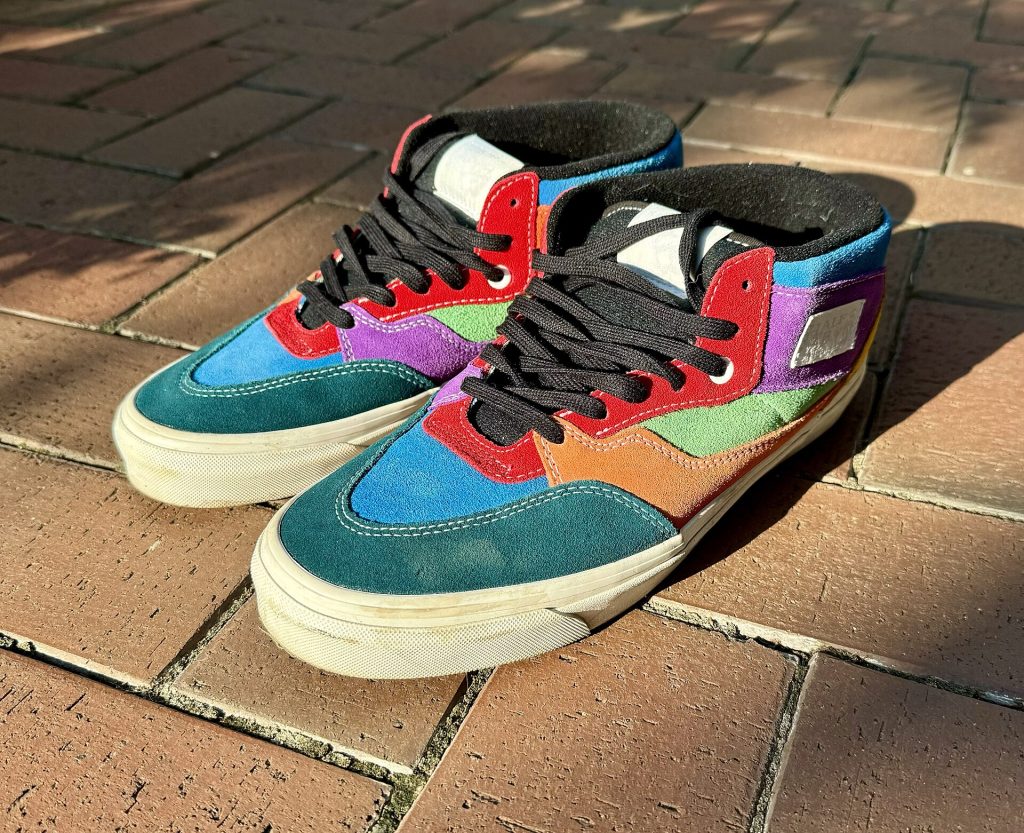
Suede survives rain because the nap lies down and dries in the direction it was pushed, not because the leather is sealed. A wet shoe that dries flat usually looks unchanged afterwards.
The permanent mark comes from water carrying dirt into the base of the fibres and then evaporating slowly, which deposits it in a ring. Drying speed matters more than the brand of spray on the shelf.
Spray timing matters too. A factory treatment is still active on a new pair, and a second layer applied too early traps solvent under the first and flattens the nap for good.
A reverse calf chukka with a short, dense nap
Reverse calf is the flesh side of a calf hide, sanded short. The fibres are fine and pack tightly, so water sits on the surface long enough for you to blot it off.
Long naps fail differently. Water wicks down the length of each fibre and reaches the leather base, and the stain then follows the nap direction instead of forming a neat ring.
Brush one spot in two directions. A nap that springs back and holds the brush mark faintly is dense enough; a nap that stays flat has been sanded too far and will absorb fast.
Spray a new pair dry, in two thin passes from thirty centimetres, and let it cure overnight before wearing. One heavy pass wets the nap and leaves it clumped.
Water dropped onto a short nap beads in small separate drops and sits there for a moment. If it spreads into a dark patch on contact, the treatment has gone and the nap is open.
A split suede loafer with an oiled finish
Split suede comes from the lower layers of the hide, where the fibres are looser. An oiled finish compensates by making the surface repel water from the inside rather than the outside.
The trade is that oil darkens the nap and masks the earliest staining, so you notice the damage weeks later. A shoe that never looks wet can still be taking on water.
Watch the welt line after a wet walk. Salt and road dirt collect there first, and a pale tide mark along the seam is the sign that water reached the base of the upper.
Squeeze a fold of the vamp and release it. Oiled suede recovers its surface quickly; a dry split stays creased and shows a lighter line where the fibres have separated.
Wear one in light rain for twenty minutes and let it dry away from heat. The ring that forms afterwards shows where water pooled, and that area needs the second pass of spray.
A treated walking shoe with a rubber toe bumper
A rubber bumper protects the toe from abrasion and does nothing for the vamp. Water enters above it, where two suede panels are stitched and cemented together.
That seam is the real path. Cement wicks moisture along the stitch holes, and the resulting stain appears as a line rather than as a patch.
Run a dry finger along the seam before buying. A stiff bead of cement sitting proud of the suede will crack with flexing and then channel water straight in.
Look at the stitch density as well. Tight stitches close the holes around the thread; wide spacing leaves gaps that open as soon as the seam flexes.
Ask how the seam is finished rather than how the upper is treated. A taped seam keeps water out of the stitch holes, while a bare one relies on cement that ages faster than the suede.
A roughout boot with the flesh side out
Roughout keeps the full thickness of the hide and turns the flesh side outward, so the nap sits on a structural layer rather than on a thin split. It takes rain better than most suede.
It still marks. The difference is that the mark sits on fibre ends which can be raised again with a brass brush once the leather is completely dry.
Never brush a wet boot. Wet fibres stretch and break, and the patch you create that way does not come back with any amount of care.
Roughout also hides a scuff better than smooth leather, because the nap stands back up over the mark as it dries. That is why work boots use it and dress shoes do not.
Two pairs in the same rain will end up different, and the difference is nearly always nap length and seam construction rather than price. Buy the short nap and the tight seam.
Then let the shoe dry at room temperature, away from radiators and direct sun. Heat sets a water line into leather as firmly as any dye sets colour into cotton.