Five lightweight shoes that stay comfortable past ten kilometres

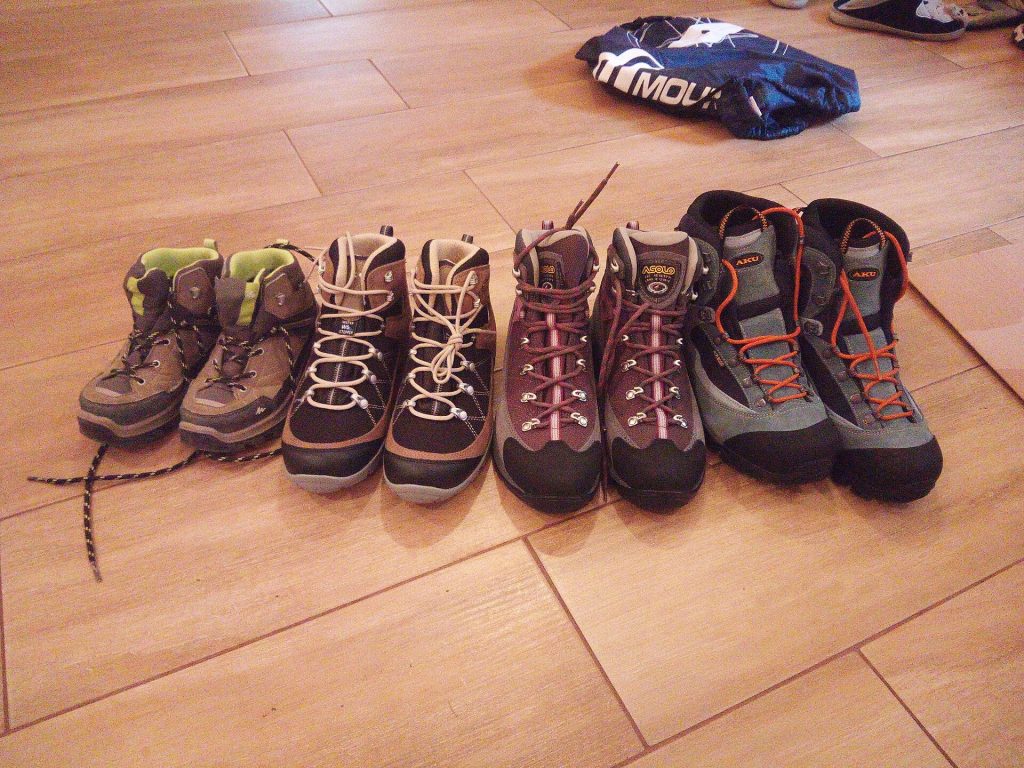
Light is not the same as easy. A shoe that saves a hundred grams can cost you more than that in fatigue if the foam under it is too thin to protect the foot after the eighth kilometre, when your stride gets shorter and your heel lands harder.
The useful question is not what the shoe weighs on a scale but what it weighs after ten kilometres, when the midsole has warmed and the upper has stretched. Weight that is badly placed costs more than weight that is well placed.
I walked a flat ten kilometre loop in each pair, weighed them before and after, and noted where the fatigue showed up first: feet, calves or the small muscles around the ankle.
An upper under two hundred grams that needs no break in
A light upper that needs fifty kilometres of breaking in is not light, it is deferred weight. Single layer mesh and knit panels that are finished at the factory are ready on the first walk.
Press the upper at the flex point and let go. It should spring back without a crease. Leather and heavy synthetic laminates crease and then rub.
Weigh the shoe dry, then weigh it after a wet walk. More than thirty grams of retained water means the upper is holding moisture against the foot, which is weight you carry twice. A wet upper also stretches, and a stretched upper rubs at the toes where it never rubbed before.
A thin foam that stays resilient at fifteen millimetres
Thin foam is only acceptable if it is dense. A fifteen millimetre forefoot of high quality foam protects better than twenty five millimetres of soft foam that has already compressed.
Press the forefoot and count how far your thumb sinks. Under three millimetres is firm enough to survive ten kilometres. Over six and you are walking on the ground with extra steps.
Check the foam at the ball after the walk. Warm and slightly glossy means it is working hard. Warm and visibly compressed with a dent means it is the wrong foam for the distance.
Ask what the foam is rather than how thick it is. A thick soft shoe feels generous on day one and hollow by week six, and no amount of extra millimetres fixes a material with poor resilience.
A heel counter that is light without being soft
Light shoes often save weight by softening the heel, and that is where the savings get paid back. A counter that flexes easily lets the heel roll inward when you are tired and landing flat.
Pinch the counter at the base. It should resist. A thin thermoplastic sheet weighs almost nothing and does the job, so softness here is a cost decision, not a weight one.
Look at the wear on the outer heel after a month. A shoe with a weak counter wears the lateral corner fast, because the foot is sliding rather than landing. That pattern is the earliest evidence that the counter has lost the argument.
A one piece outsole with no glued seam at the ball
Seams and glued joints are where light shoes come apart, and the ball is where they flex most. A single moulded outsole has fewer places to fail and usually weighs less than a stitched assembly.
Bend the shoe hard at the ball and look at the junction between outsole and midsole. Any gap that opens is a gap that will fill with grit.
Rubber coverage also matters. A light shoe with rubber only at the heel and toe saves grams and loses grip exactly where you need it on a wet pavement at kilometre nine.
A shoe that bends easily at the waist as well as the ball has no structure under the arch at all, and that is where a long walk turns into a long ache.
A lacing run that spreads tension without hardware
Metal eyelets and thick laces add grams and create pressure points. A soft webbing run with flat laces holds the midfoot without a hard edge over the instep.
Lace the shoe and press a finger under the laces across the top of the foot. You want even pressure, not a tight band in the middle.
Retie after five kilometres. A light upper stretches, and a lacing that was right at the door is often loose at the halfway point. Flat laces also stay tied, which matters more than it sounds when your hands are full of shopping.
The pairs that felt best at ten kilometres were never the lightest on the scale. They were the ones where nothing had to be re-adjusted after the fifth kilometre.
Buy the weight you can carry for two hours, not the number on the box.