Five rubber outsoles that still grip wet pavement after a season

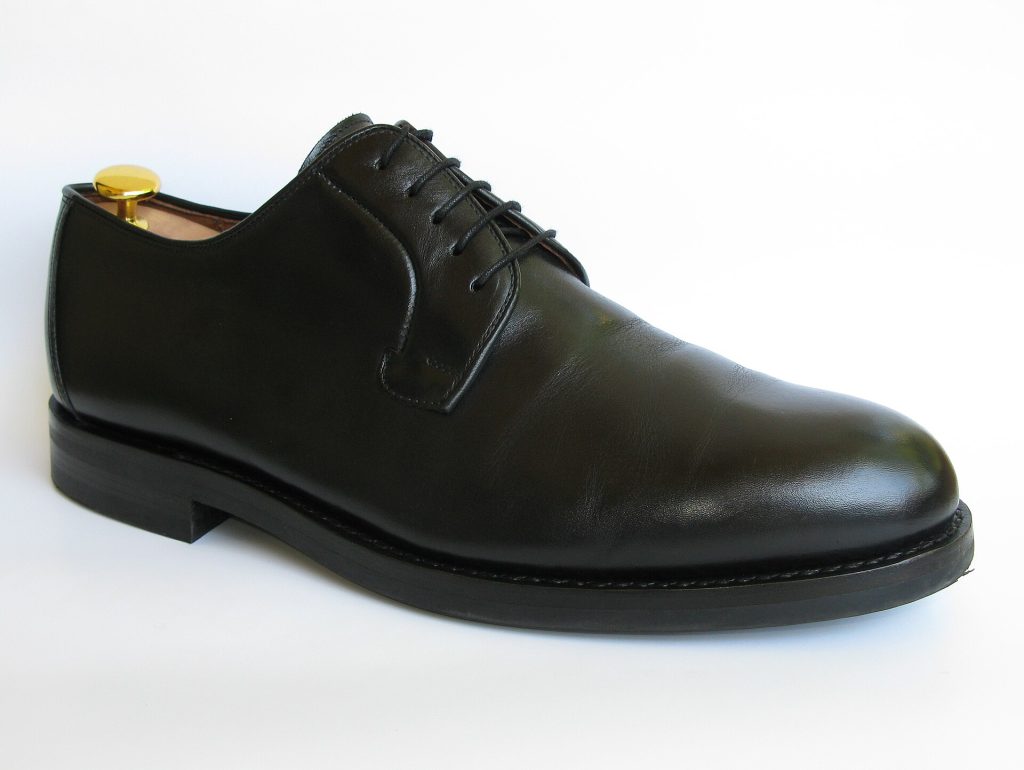
An outsole that grips on day one is not evidence of a compound that will still grip in month eight. Wet grip is the first property a rubber loses as it ages, and it goes long before the tread looks worn.
Three things decide whether a sole holds a wet pavement: the hardness of the compound, the depth of the tread, and where the water is allowed to go. All three can be judged in the shop with a thumbnail and a wet tile.
These five soles were still biting after a full winter of rain, bus stops and wet supermarket floors.
Rubber soft enough to flatten under a thumbnail
A wet pavement needs the rubber to deform into the tiny texture of the road. Hard compounds, around 70 Shore A and above, stay flat and skate across the top of the water film.
Grippy walking soles usually sit between 55 and 65 Shore A. Press a thumbnail into a lug and you should leave a shallow dent that fades within a minute.
If the thumbnail slides off, the rubber is too hard for rain, whatever the tread pattern suggests. That sole will be fine on dry concrete and useless on a painted crossing.
A sole with a high natural rubber content feels warmer and slightly tacky to the touch than a styrene butadiene blend, which is harder and cheaper. That warmth is the compound telling you it will still flex at ten degrees.
Tread deep enough to open a drain
Water has to leave the contact patch, and it leaves through the grooves. Four millimetres of depth is the working minimum on pavement. Under three, the pattern is decoration.
Look at the grooves rather than the blocks. They should run to the edge of the sole so water has an exit, not stop in a closed pocket that fills and stays filled.
Measure the depth with a matchstick at the heel and at the ball. Wear is always faster at the heel, and the heel is where the first slip happens.
Sipes cut across the block, not along it
A sipe is a thin cut that lets a block fold and squeegee water sideways. Cut across the block, it works. Cut along the direction of travel, it does almost nothing.
Bend the sole by hand and watch the cuts open. If they close instead, or if there are none, the block is a solid pad of rubber with one flat face to hydroplane on.
Fine sipes also tell you the compound is soft enough to be worth cutting. Makers do not put them into hard rubber, because they would not survive a week of walking.
Sipes wear out first. On a well used sole they round over and vanish inside a year, and the block left behind is flat again. Nobody re-cuts sipes, so the grip on a sipe has a shelf life from the day the shoe is made.
A heel edge that is square, not rounded off
The heel takes the first contact and most of the wear. A square trailing edge cuts through the water film. A rounded, polished edge rides on top of it.
New soles often arrive with the heel edge already chamfered for looks. Run a finger along it. A chamfer of a millimetre is fine. A soft dome means you will be walking on a skid by spring.
This is also the first place a cheap sole shows its age. Once the edge is smooth and shiny, no amount of tread elsewhere will save a wet step.
Heel wear is the cheapest repair on a stitched shoe. A cobbler can replace the heel block and leave the rest of the sole alone, which buys years on a sole that only ever fails at the back.
A flex point that does not peel the rubber off
The sole has to bend with the foot at the ball. Rubber that has gone chalky at that crease is oxidised, and oxidised rubber is hard rubber.
Flex the shoe hard at the ball and look along the crease. Fine cracks at forty five degrees are the warning. Deep cracks mean the compound has lost its plasticiser and will start to chunk away in pieces.
My own test is a wet bathroom tile, bare feet, shoe on. Walk heel to toe ten times. If the sole squeaks and slides rather than gripping, it fails, whatever the label claims.
None of these checks needs a lab. A thumbnail, a matchstick, a wet tile and one hard flex at the ball will separate a sole built for weather from one built for a photograph.
Replace the shoe when the heel edge is shiny and the grooves are under three millimetres. A resole only makes sense if the upper and the sole attachment are still worth the money.