Four lug soles that hold traction on polished floors

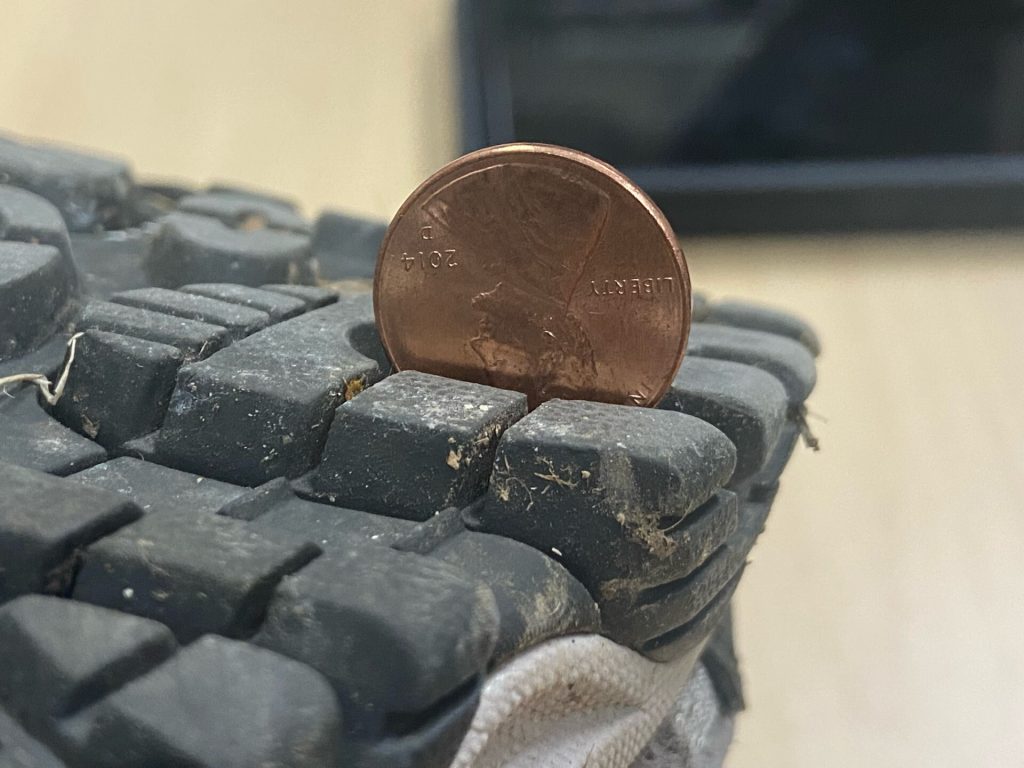
An aggressive lug sole is the worst thing to wear on a polished floor. Deep lugs cut the amount of rubber touching the ground, and less contact means more pressure per lug and less friction where you need it.
On dry polished tile you want a soft, broad, slightly tacky surface, not a mountain boot. The compound matters more than the pattern, and the pattern matters more than the depth.
These four held on wet supermarket tile and polished concrete stairs, which is a harder test than a gravel path.
Slip resistance is a system of rubber, pattern, floor and the film between them. Change one of the four and the number on a test certificate stops meaning anything in your building.
Rubber soft enough to conform to the floor
Friction on a smooth floor comes from rubber deforming into the surface at a microscopic level. Hard lug rubber, around 65 Shore A and up, cannot do that, so it slides on the polish.
Press a thumbnail into a lug. A soft compound takes a dent and holds it for a second. A hard one leaves nothing and feels like a pencil eraser that has dried out.
Soft rubber wears faster outdoors, and that is the trade. If your day is on tile and your evening is on pavement, accept the wear and buy the softer compound.
A sealed vinyl floor usually carries a polish that behaves like a thin layer of wax. Soft rubber pushes through it. Hard rubber rides on top of it, and that is the whole difference between a confident step and a slide.
Lugs shallow enough to keep the contact area
Lug depth is always a compromise. Five millimetres clears mud and gravel. Anything much over that on a flat floor lifts most of the sole clear of the surface and leaves you standing on a few small pads.
Put the shoe on a sheet of paper and press down. Look at the print. A sole that leaves a broad, near continuous outline will grip indoors. One that leaves a dot pattern will not.
This is why a trail shoe is dangerous in a hospital corridor. The pattern was designed for soft ground, and a polished floor is the exact opposite of soft ground.
Lug shape counts for as much as depth. Rounded pads with a wide face hold more rubber on the floor than sharp edged blocks, which touch along a ridge and nothing else.
A shallow lug also flexes with the sole instead of standing proud of it. That keeps the full face in contact through the step, rather than tipping onto one edge as the foot rolls forward.
Channels that let dust and water escape
Polish, dust and water all behave the same way. They need somewhere to go. A lug pattern with open channels to the edge pushes them out from under the foot.
Closed pockets, the kind that hold mud, also hold a film of water. That film is what you hydroplane on at the top of a stair.
Look at the sole from the side. You should be able to trace a path from the centre of the forefoot to the outside edge without crossing a wall.
Water is the harder problem. On a wet polished floor the film has to be broken by edges, and a face with fine cuts across it does that better than a plain one at the same depth.
Cleaning helps more than people expect. A sole with polish and dust packed into its channels behaves like a smooth sole, because the pattern is now full.
A compound that stays soft when cold
Rubber stiffens as it cools, and a compound that is marginal at room temperature turns hard at five degrees. Polished stone entrances in winter are the classic failure point.
There is no shop test for glass transition temperature, but there is a proxy. A sole that feels waxy and slightly tacky when warm usually has more of the soft phase in the mix and stays useful longer in the cold.
If a lug has gone shiny and hard across the whole sole, not just at the edges, the rubber has aged out. That is not a shoe to wear on tile, and it is not worth resoling.
Cold hardens the polish on the floor as well, which is why entrance halls fail in January and not in June. Two hard surfaces against each other is the worst combination in the building.
The test that settles it: wet a glazed tile, stand on it in the shoe, and try to push the shoe sideways with your free foot. A sole that skates across the glaze will do the same under your full weight on a stair.
Keep the deep lugs for the garden. For a polished floor, buy soft, shallow and broad, and replace the shoe once the rubber goes hard.