Six patent leather shoes that do not crack at the flex point

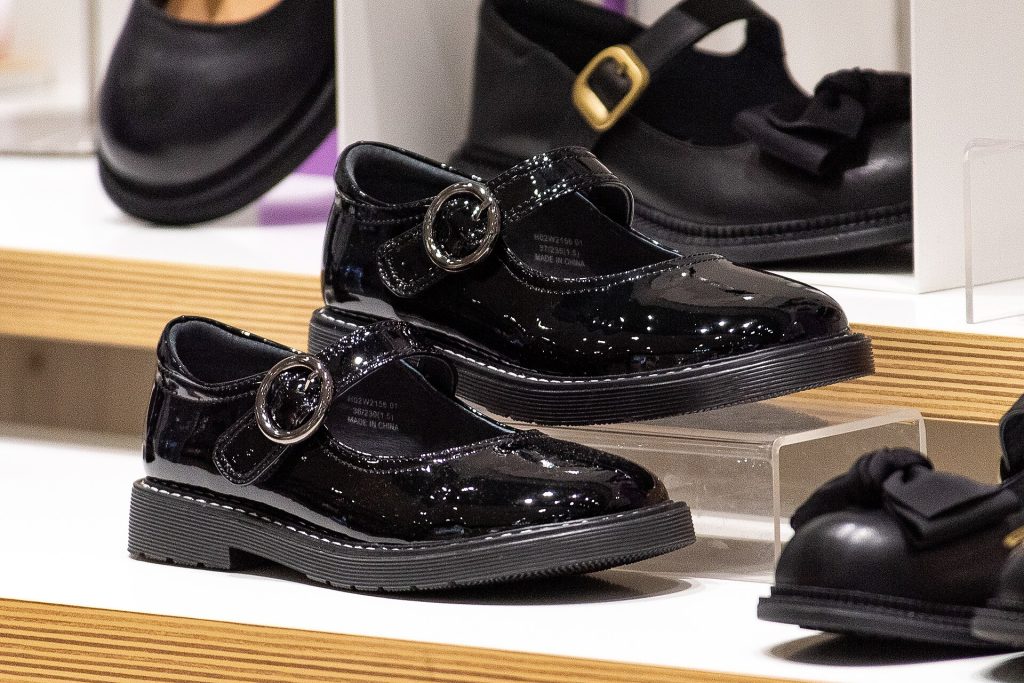
Patent leather cracks at the flex point because the coating loses plasticiser faster than the leather under it can compensate. The crack is a film failure, not a leather failure.
The finish is a plastic layer, usually polyurethane, laid on a substrate. Every flex pulls plasticiser toward the surface of the film, where it evaporates and leaves the polymer shorter and stiffer.
Thin films on soft substrates survive years. Thick films on stiff substrates crack in the first season, along the exact line where the toes bend.
A calf patent oxford with a thin finish
A thin patent film follows the substrate instead of resisting it. The crease stays a crease rather than turning into a fissure that runs across the vamp.
Thin films show every imperfection underneath, which is why makers rarely use them over corrected grain. The surface has to be nearly perfect before coating starts.
Bend the vamp and watch the reflection. A clean, narrow break is what you want; a wide pale band at the fold means the film is thick enough to fail.
Heat is the accelerator. A shoe left near a radiator loses plasticiser in weeks rather than seasons, and the loss shows first where the vamp folds.
A patent loafer with a fabric backed upper
A woven backing gives the film something to grip and stops a crack from running. The trade is that fabric holds moisture against the leather underneath.
These fail from the inside out. The surface looks intact until the backing rots along the flex line and the coating loses its support in one narrow strip.
Look inside the vamp under strong light. A backing that has gone soft or has separated from the leather is already on its way, even on a shoe that shines.
A backing that has separated also rustles when you flex it. Sound is a diagnostic here, and it is easier to hear than to see.
A patent ankle boot with a reinforced vamp
A reinforcement layer under the vamp spreads the bend over a longer distance, which lowers the strain per unit area. Cracking is a strain problem before it is a chemistry problem.
Too much reinforcement makes it worse. A stiff board under a stiff film concentrates the fold at the edge of the board, which is where the first crack appears.
Press the vamp where it meets the toe. A gradual, soft transition is right; a hard ridge you can feel is the edge of a reinforcement you will eventually crack along.
Reinforcement also changes how the shoe feels underfoot, because a stiff vamp stops the toes from rolling. That trade is worth knowing before you pay for it.
A patent pump with a soft kid substrate
Kid is thin and pliable, so the film above it deforms with very little stress. These are the patent shoes that survive daily wear without a visible break.
The heel counter is where they go. A soft substrate gives no structure, so the counter collapses and creases the film from the side rather than the front.
Squeeze the heel pocket. It should resist slightly and spring back. A pocket that folds flat will take the whole upper out of shape with it.
A patent derby with a matte flex zone
Some makers leave a band of matte finish across the flex point, where a crack would be least visible. It is a design fix for a material problem, and it works.
It also hides the early signs. You find out the film has failed when the matte band begins to lift along its boundary instead of when the surface first breaks.
Run a fingernail along the line between gloss and matte. Any step you can catch means the two finishes are already separating at that edge.
A matte zone also collects polish differently, so it shows a dull patch that no cloth will even out. That part is cosmetic, and it does not predict the crack.
A patent sandal with a split leather backing
Split leather is weaker in tension than full grain, but its loose fibre structure gives the film somewhere to move. Cracks stay short instead of crossing the strap.
Splits also stretch. A strap that has taken on water and dried under tension will not return to length, and the film cracks where the buckle holds it.
Check the strap edges. Raw, unsealed edges on a patent strap wick water straight into the split, and that is where the coating lifts first.
Straps crack at the buckle and at the toe post, not in the middle. Both are points where the film is held still while the foot keeps moving.
Patent is a film, and films fail at edges and folds. Judge the substrate and the thickness of the coat, and the shoe will tell you where it will break.