Six wedge soles that stay level instead of rolling outward

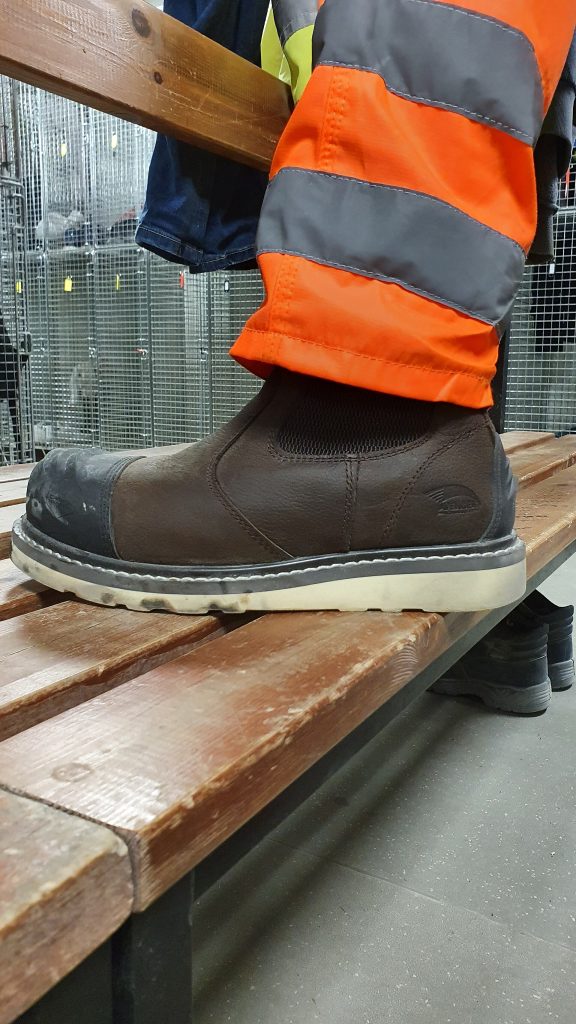
A wedge sole rolls outward because the wedge is not level, not because the wearer overpronates. The sole is one solid block, and any difference in height between its inner and outer edge becomes a slope the ankle has to fight all day.
The check is simple. Stand the shoe on a flat counter and sight along the sidewall. If the base is not parallel to the surface, the shoe is already asking your foot to lean.
These six stayed level, and the wear pattern at six months proved it.
A sidewall that runs vertical, not flared
A wedge cut with vertical sides keeps its footprint. A flared wedge looks stable and is not, because the widest part sits above the ground and hands the ankle a lever to roll over.
Stand the shoe on glass or a counter and sight along the outer edge. Contact should be a line along the sole, not a point under the middle of the arch.
Flare is also where the wear begins. A wedge that has mushroomed outward at the ball has lost its shape and will keep rolling further every month.
A heel narrower than the forefoot by a hand’s width
The heel of the sole should be narrower than the ball, because the heel of the foot is narrower. A wedge with a heel as wide as the forefoot catches the ground on the outside and levers the ankle out.
Measure across the heel and across the ball with a ruler. A difference of fifteen to twenty millimetres is normal on a walking wedge.
If the two are almost equal, the shoe will roll outward on the outer heel corner. That is geometry, not a gait problem, and no insole will fix it.
A footbed tilted slightly inward at the heel
Good walking wedges build in a couple of degrees of inward tilt at the heel, sometimes called a varus wedge. It puts the ankle in a neutral line before the foot is loaded.
Set the shoe on a level surface and put a marble on the footbed at the heel. It should roll toward the inner edge, slowly, not sit still.
A flat or outward tilting footbed is the one that produces the wear pattern everyone blames on their own ankles.
That tilt is small enough that you will not notice it standing still. You notice it at hour six, as a tired outer ankle and a shoe that has apparently started to lean.
A shank that stops the wedge collapsing at the waist
The waist of a wedge carries the arch and has nothing beneath it. A steel or fibreglass shank runs from heel to ball and keeps that span from folding under load.
Hold the shoe at the heel and the ball and press down on the middle. It should feel like a bridge, not a hammock.
Without a shank the wedge compresses at the waist under body weight, and the sole tilts outward as it does. That is a slow roll you feel in the ankle by mid afternoon.
Rubber that wears at the same rate on both sides
Wear is a measurement of hardness as much as of gait. If the outer edge of the sole is softer than the inner, it wears faster and the wedge leans outward within a season.
Press a thumbnail into both edges at the same point under the arch. The resistance should feel the same on each side.
Then read the wear after a month. Even scuffing across the full width is good. A bright polished strip along the outer edge only means the shoe is already rolling.
A heel block centred under the heel bone
The load line should drop from the ankle through the middle of the heel block. A heel set too far back puts contact behind the leg and tips the shoe outward at every step.
Put the shoe on and stand naturally. The back edge of the sole should sit roughly under the back of your heel, not extend behind it like a shelf.
A shelf of more than a centimetre is a trip hazard on stairs and a roll hazard on pavement, and no insole will correct it.
Look at the waist from behind as well. It should be level across its width. A waist that dips on one side is a moulding fault rather than a wear pattern, and it will not correct itself with time.
The wear pattern to watch is the outer rear corner of the heel, worn at an angle rather than flat. Once that bevel appears, the wedge has started to lean and will not come back.
A wedge cannot be re-levelled by a cobbler, only replaced, and only if the shoe was stitched. Buy the level pair the first time.