Four canvas sneakers that keep their colour through repeated washing

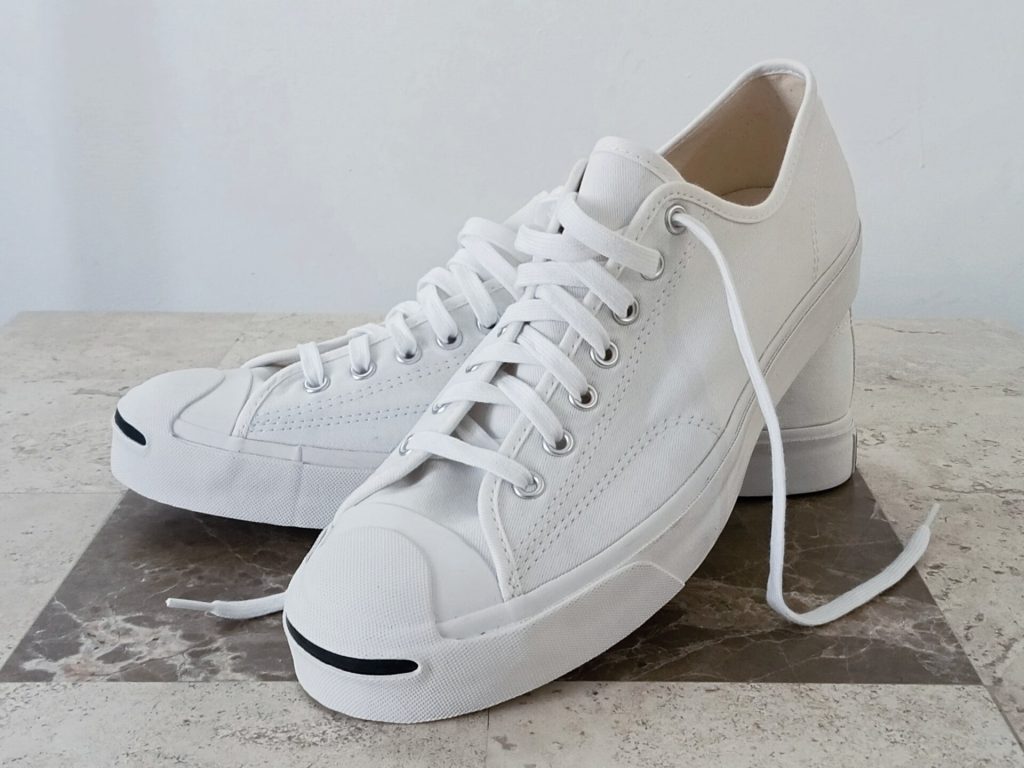
Canvas keeps its colour through washing when the dye is fixed inside the fibre rather than printed on top of it. Most fading on a canvas upper is dye loss, not dirt.
Sulphur and vat dyes penetrate cotton and hold through repeated wet cycles. Pigment dyes sit on the yarn surface and wash off in a thin, even film that leaves the weave pale.
How you brush matters as much as what you use. Brushing across the weave abrades surface fibres and takes the dye with them, so the direction of your hand decides the result.
A sulphur dyed plimsoll
Sulphur dyes build colour inside the cotton and are hard to strip out. A plimsoll dyed that way fades at the edges and the toe, which reads as wear rather than as washing.
The vulcanised sidewall is the weak point. Rubber and canvas move at different rates, and that bond takes water in every wash until a white line appears.
Scrub along the weave, never across it. A brush travelling with the warp and weft cleans the surface without raising fibre or pulling dye out of the yarn.
Rinse in cold water until it runs clear before drying. Warm water opens the cotton and lets loose dye migrate into the seams, where it dries as a darker line.
Dye loss here shows as a paler toe and a darker seam, because the seam holds water longer and the toe takes the abrasion. Read that pattern before blaming the washing.
Hot water is the other half of the problem. It opens the cotton, releases dye and shrinks the upper onto the sole, which is why a warm wash leaves a shoe short and pale.
A garment dyed high top with a gum sole
Garment dyeing colours the finished shoe, so seams and lining take the same tone as the upper. The colour sits deeper in the yarn than any surface print.
It also means the dye is still mobile. First washes bleed heavily, and a light sock will pick up colour for weeks after the shoe stops looking wet.
Wash it alone twice before wearing it against anything pale. If the water runs clear on the second wash, the excess dye has gone and the remaining colour is fixed.
Keep the gum sole out of the machine. A natural rubber outsole softens in warm water and takes a set that never quite returns.
A gum sole also yellows with washing, and no amount of rinsing brings it back. That is oxidation rather than dirt, and it happens faster in warm water.
A heavy deck shoe in a tight weave
A tight weave with thick yarn exposes less surface per gram of fabric, so abrasion removes proportionally less dye. These hold colour better than a light poplin upper.
Thick yarn also holds water longer. Left damp, the cotton grows mildew under the insole, and the stain that leaves behind does not come out with soap.
Dry it packed with newspaper, changed twice in the first day, and away from direct heat. Warmth sets both mildew and the tide line from the last rinse.
A deck shoe should be washed in a basin, not in a machine. The brass eyelets and the leather collar both suffer long before the cotton does.
Weigh the shoe dry, then weigh it wet. A heavy weave can hold close to its own weight in water, and a slow even dry is what keeps the colour from pooling.
A pigment dyed slip on with a bonded toe
Pigment dye sits on the yarn and gives a flat, even colour that looks best on the first day. It is also the first thing to go in a washing machine.
The bonded toe is the real risk. Water softens the adhesive, and once the bond lifts the toe curls and the raw edge begins to fray.
Hand wash only, cold, and never wring the toe box. Press water out through the sidewall with a towel, then reshape the toe with your hand before drying.
Press a damp cloth against the dyed surface and look at the cloth. Colour on the cloth after ten seconds means the surface is still releasing dye at every wash.
Cold water slows the adhesive down, but it does not stop it. Time in water matters more than temperature for a bonded toe, so a long soak is worse than a quick wash.
Rinse until the water runs clear, then roll the shoe in a towel instead of wringing it. Twisting the upper distorts the weave and leaves a set in the toe.
Colour loss on canvas is mostly a mechanical problem dressed up as a chemical one. Brush with the weave, rinse cold, dry flat, and the upper will outlast the outsole.